
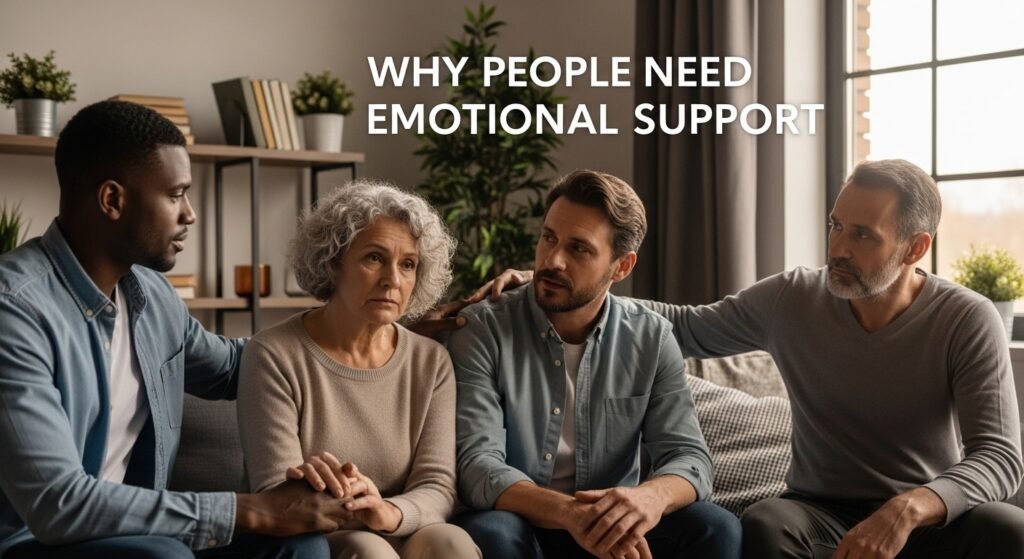
Let’s be real. Life in America right now is a lot. Between sky-high rent, impossible work deadlines, family pressures, political noise, and the never-ending ping of notifications stress has become almost a background hum of daily existence. According to the American Psychological Association (APA), more than 75% of Americans report experiencing moderate to high levels of stress, with work, money, and the state of the nation consistently ranking as the top triggers.
And yet, despite all of this, most of us still struggle to do one of the simplest, most powerful things available to us: talk to someone about it.
Not because we don’t want help. But because we’ve been quietly taught that admitting we’re overwhelmed is somehow a sign of weakness. That we should just push through. Handle it. Figure it out alone.
This article is here to challenge that idea and to show you that talking about stress isn’t just emotionally relieving. It’s one of the smartest, most science-backed things you can do for your health, your relationships, and your future.
Why We Don’t Talk And Why We Should
Most Americans were raised in a culture that prizes independence. From a young age, we’re taught to “suck it up,” “keep it together,” and avoid showing vulnerability. Men especially get messages that expressing emotional pain is a weakness. Women often feel guilty for “burdening” others. And across the board, there’s a quiet shame around not having everything under control.
But here’s what science tells us: keeping stress bottled up doesn’t make it disappear. It festers. Research from Harvard Medical School has found that suppressing emotions actually increases the physiological stress response meaning the body works harder, not less, when you refuse to process what you’re feeling. If you’re unsure whether what you’re feeling qualifies as something you should open up about, it helps to understand why people need emotional support in the first place especially during high-pressure periods of life.
On the flip side, simply talking about stressful experiences can reduce the brain’s threat response. A study published in the journal Psychological Science found that putting feelings into words a process called “affect labeling” significantly reduces activity in the amygdala, the brain’s alarm system. In plain English: talking calms your nervous system down.
Talking about stress also:
- Helps you gain a clearer perspective on what’s actually happening
- Reduces feelings of isolation and loneliness
- Opens the door to practical advice and new solutions
- Strengthens relationships through vulnerability and trust
- Reduces cortisol levels, which protects your heart, immune system, and sleep
What Happens in Your Body When You’re Chronically Stressed
Chronic stress isn’t just “in your head.” It has very real physical consequences. Here’s a breakdown:
Body System | What Stress Does To It | Long-Term Risk |
|---|---|---|
Brain & Nervous System | Triggers fight-or-flight, floods brain with cortisol | Memory loss, anxiety disorders, depression |
Heart & Cardiovascular | Raises blood pressure and heart rate | Heart disease, stroke, hypertension |
Immune System | Suppresses immune response | Frequent illness, slower healing, inflammation |
Digestive System | Disrupts gut microbiome, causes cramping | IBS, acid reflux, appetite changes |
Sleep & Recovery | Increases alertness, blocks deep sleep stages | Insomnia, chronic fatigue, poor concentration |
Muscles & Joints | Causes tension and tightness throughout body | Chronic pain, headaches, jaw problems (TMJ) |

Who Can You Actually Talk To
One of the biggest barriers people face is not knowing who to turn to. The good news is that you have more options than you might think and different people serve different purposes in your support system.
1. Trusted Friends or Family
This is the most accessible option and often the most emotionally satisfying. Talking to someone who knows you who gets your context, your history, your family dynamics can be incredibly grounding. You don’t need them to fix anything. You just need them to listen.
Tips for making these conversations work:
- Choose someone who tends to be calm and non-judgmental
- Tell them upfront what you need: “I just need to vent” or “Can you help me think through this?”
- Pick a time when neither of you is rushed or distracted
- Be honest the more specific you are about what’s stressing you, the more helpful the conversation becomes
2. A Therapist or Counsellor
If stress has become a regular part of your daily life, or if it’s affecting your sleep, work, or relationships, a professional therapist is absolutely worth it. Therapists are trained to help you understand the root causes of stress, develop healthy coping strategies, and reframe negative thought patterns.
In the U.S., mental health therapy has become more accessible than ever. Options include:
- In-person sessions through private practices or community health centers
- Online platforms like BetterHelp, Talkspace, or Cerebral (often more affordable)
- Employee Assistance Programs (EAPs) many American employers offer free therapy sessions as a benefit
- Community mental health centers for those without insurance or with Medicaid
3. Support Groups
There’s something uniquely powerful about talking to people who are going through the same thing you are. Whether it’s a grief support group, a caregiver support group, a veterans’ support circle, or a general stress management group being heard by people who truly get it is deeply validating.
Support groups are available in-person through local hospitals, churches, and community centers and increasingly, online through platforms like Reddit, Facebook Groups, and dedicated mental health apps. For those who feel safer remaining anonymous, this anonymous emotional support guide explains how confidential conversations work
4. A Doctor or Primary Care Physician
If stress is manifesting physically through headaches, stomach issues, chest tightness, or sleep problems your primary care doctor is a great first point of contact. They can rule out medical causes, refer you to a mental health professional, and discuss whether medication might be helpful alongside therapy or lifestyle changes.
Comparing Your Options: Who to Talk to About Stress
Option | Best For | Cost in the U.S. | Availability |
|---|---|---|---|
Close Friend/Family | Emotional support, venting, feeling heard | Free | Anytime |
Therapist (in-person) | Deep-rooted stress, anxiety, depression | $100–$250/session (insurance may help) | Weekly appointments |
Online Therapy | Convenience, affordability, anonymity | $60–$100/week | 24/7 messaging, scheduled video |
EAP (Employer Program) | Work-related stress, first-time therapy users | Often free (3–8 sessions) | Through employer HR |
Support Groups | Shared experiences, community connection | Free to low-cost | Weekly, in-person or online |
Primary Care Doctor | Physical symptoms of stress, referrals | Copay varies by insurance | By appointment |
How to Start the Conversation
One of the hardest parts of talking about stress is actually starting. You might not know what to say, or you might worry about how the other person will react. Here are some real-world ways to open the door:
- “Hey, I’ve been feeling really overwhelmed lately. Can I talk to you about something?”
- “Work has been really rough and I haven’t been handling it well. I just need someone to listen for a bit.”
- “I’m not really sure how to explain it, but I haven’t felt like myself. Can we just talk?”
- “I think I might need professional help but I’m scared. Can you help me figure out where to start?”
You don’t need the perfect words. You just need to start. The conversation will find its own shape once it begins.
What If You Don’t Know What’s Stressing You
This is more common than you’d think. Sometimes stress accumulates from so many small sources that it just becomes a constant background weight and you can’t pinpoint a single cause. That’s okay. You can say that too: “I just feel really burned out and I’m not even sure why.”
A therapist is especially helpful in these situations, as they can help you map the landscape of your stress and identify patterns you might not have noticed on your own.

Barriers Americans Face And How to Get Past Them
Even when we know we should talk to someone, real-world obstacles get in the way. Let’s name them and address them honestly.
- “I don’t want to be a burden.” The people who love you would rather hear about your struggles than watch you suffer silently. Letting someone help you is actually a gift to them.
- “Therapy is too expensive.” Look into your employer’s EAP, community health centers, sliding-scale therapists (Psychology Today’s directory lets you filter by fee), and online platforms that are significantly cheaper than traditional sessions.
- “I don’t have time.” Online therapy, 15-minute phone calls with a friend, or even journaling can all be done in the margins of a busy schedule. Stress management doesn’t require hours it requires intention.
- “Real men don’t talk about their feelings.” Men die younger, have higher rates of suicide, and are less likely to seek help than women. The data tells us the “stay strong” narrative is literally killing men. Talking isn’t weakness silence is the risk.
- “What if they judge me?” — Choose your confidants carefully. Start with one person you genuinely trust. With a therapist, judgment is literally off the table they’ve heard it all.
Common Stress Talker Myths vs. The Reality
The Myth | The Reality |
|---|---|
Talking about stress makes it worse | Research shows talking reduces the brain’s threat response and lowers cortisol |
Only “serious” problems deserve therapy | Therapy is for anyone who wants to function better — stress qualifies |
If I talk about it, I’ll fall apart | Opening up actually builds emotional resilience over time |
Friends will get tired of hearing it | Real friends want to be there and they appreciate honesty over pretending everything’s fine |
I should be able to handle this on my own | Everyone needs support. Independence doesn’t mean isolation it means knowing when to ask for help |
What to Do When Talking Isn’t Enough
Sometimes, stress has built up to a point where conversation alone isn’t enough. If you’re experiencing any of the following, it’s important to reach out to a mental health professional or your doctor right away:
- Persistent feelings of hopelessness or emptiness that last more than two weeks
- Thoughts of harming yourself or others
- Inability to perform basic daily functions eating, sleeping, working
- Turning to alcohol, drugs, or other substances to cope
- Panic attacks or severe physical symptoms
If you’re in crisis right now, please contact the 988 Suicide and Crisis Lifeline by calling or texting 988. It’s free, confidential, and available 24/7 across the United States.
Final Thoughts
Here’s the truth: stress is not a personal failing. It’s a signal. Your mind and body are telling you that something needs attention that you need support, rest, connection, or change. Ignoring that signal doesn’t make you stronger. Responding to it does.
Talking to someone whether it’s your best friend over coffee, a therapist on a video call, or a stranger in a support group who gets exactly what you’re going through is one of the most courageous and effective things you can do. It takes honesty. It takes vulnerability. But on the other side of that conversation is clarity, relief, and the reminder that you are not in this alone.
America is going through a lot right now. You are going through a lot right now. And that’s okay as long as you don’t try to go through it alone.