
AI chatbot therapy refers to the use of artificial intelligence-powered apps and platforms such as Woebot, Wysa, or Replika to simulate therapeutic conversations and offer mental health support. While these tools have gained massive popularity across the United States, especially among younger adults seeking affordable and on-demand support, they come with serious limitations that every user must understand. AI chatbot therapy limitations include the inability to diagnose mental health conditions, lack of genuine human empathy, poor crisis response, data privacy concerns, and the absence of any regulatory oversight comparable to licensed therapy.
In the U.S., where nearly 1 in 5 adults experiences a mental illness each year (NAMI, 2024), the appeal of always-available AI therapy apps is understandable. However, mental health professionals and researchers warn that over-relying on these chatbots especially for serious conditions like depression, PTSD, or anxiety disorders can delay real treatment and even worsen outcomes. This article breaks down everything Americans need to know about the real limitations of AI chatbot therapy, helping you make an informed, safe choice about your mental health care.
1. What Is AI Chatbot Therapy
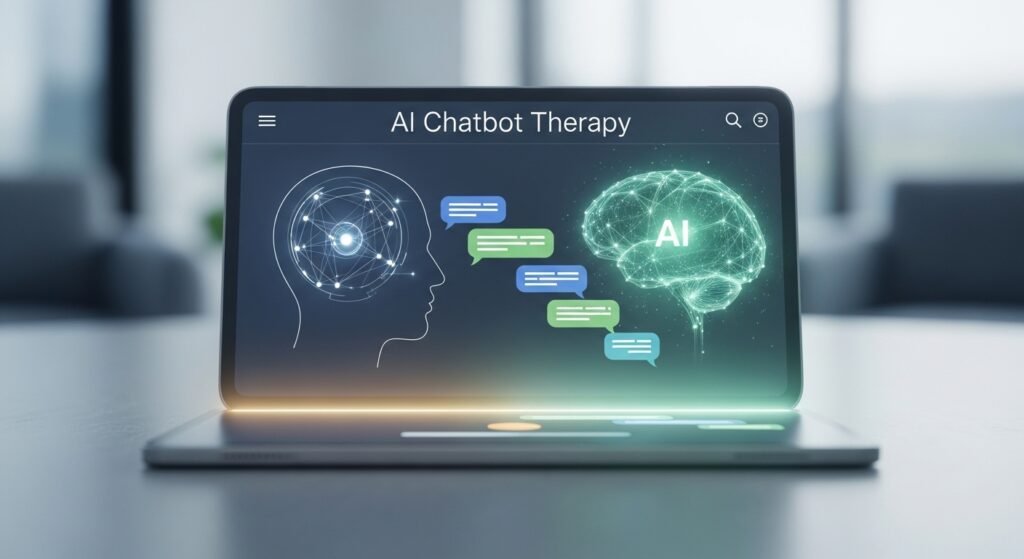
AI chatbot therapy is a form of digital mental health support where software programs use natural language processing (NLP) and machine learning algorithms to engage users in text-based conversations. These apps are designed to mirror some techniques used in traditional therapy such as cognitive behavourial therapy (CBT) prompts, mood journaling, and mindfulness exercises without any human therapist involved.
Popular AI therapy chatbots in the U.S. include:
- Woebot Uses CBT-based techniques and is backed by Stanford research
- Wysa – An AI emotional support chatbot used by millions globally
- Replika – A companionship AI often used for emotional support
- Youper Tracks mood and offers brief CBT-style check-ins
- BetterHelp’s AI tools – Supplements human therapist services with AI features
These platforms are marketed as mental wellness tools, not replacements for therapy but millions of Americans are using them as their primary source of emotional support, which is where the real danger lies.
2. AI Chatbot Therapy vs. Licensed Therapy
Understanding the core differences between AI chatbots and licensed mental health professionals is crucial for making safe mental health decisions. The table below outlines the key distinctions:
AI Chatbot Therapy vs. Licensed Therapist
Feature | AI Chatbot Therapy | Licensed Therapist |
|---|---|---|
Availability | 24/7, instant access | Scheduled appointments only |
Cost | Free or low-cost ($0–$30/mo) | $100–$300+ per session |
Crisis Intervention | Limited or none | Fully equipped |
Diagnosis Ability | Cannot diagnose | Clinically trained & licensed |
Human Empathy | Simulated only | Genuine & adaptive |
Privacy & HIPAA | Often unregulated | Legally protected |
Treatment Plans | Generic responses | Personalized & evidence-based |
As the comparison above makes clear, AI chatbots fall significantly short when it comes to the most critical aspects of genuine mental health care clinical assessment, crisis management, and legally protected confidentiality.
3. The Core Limitations of AI Chatbot Therapy
AI Cannot Diagnose Mental Health Conditions
One of the most critical AI chatbot therapy limitations is the complete inability to provide a clinical diagnosis. In the United States, only licensed mental health professionals including psychologists, psychiatrists, and licensed clinical social workers (LCSWs) are legally authorized to diagnose conditions like major depressive disorder, generalized anxiety disorder, PTSD, or bipolar disorder.
An AI chatbot cannot:
- Review your full psychiatric and medical history
- Conduct standardized clinical assessments (e.g., PHQ-9, GAD-7, DSM-5 criteria)
- Differentiate between overlapping diagnoses that require clinical judgment
- Account for medication interactions or physical health comorbidities
Without accurate diagnosis, users risk receiving generic coping suggestions for conditions that require targeted, evidence-based treatment plans.
No Genuine Human Empathy
While AI chatbots are programmed to sound empathetic, they do not actually feel, understand, or connect with human emotional experience. Therapeutic relationships what clinicians call the “therapeutic alliance” are one of the strongest predictors of positive outcomes in mental health treatment. Research published in the Journal of Consulting and Clinical Psychology consistently shows that the quality of the human connection between therapist and patient is a primary driver of treatment success.
AI chatbots simulate empathy through pattern recognition and pre-trained responses. They cannot:
- Pick up on tone, hesitation, or non-verbal cues
- Adapt authentically to subtle emotional shifts mid-conversation
- Provide the warmth of genuine human presence that is therapeutic in itself
- Build a real, trust-based long-term therapeutic relationship
Dangerous Gaps in Crisis Response
Perhaps the most alarming limitation of AI chatbot therapy is its failure in crisis situations. When a user expresses suicidal ideation, self-harm behaviours, or acute mental health emergencies, an AI chatbot is entirely unequipped to respond safely and effectively.
Licensed therapists are trained in:
- Suicide risk assessment using validated tools (Columbia Protocol, SAD PERSONS scale)
- Safety planning for at-risk individuals
- Mandatory reporting obligations under state law
- Coordinating emergency hospitalization when necessary
Most AI chatbots in a crisis will simply display a static message directing users to the 988 Suicide and Crisis Lifeline which is helpful, but no substitute for trained human intervention. In 2023, a widely reported case in Europe highlighted how a chatbot’s responses may have encouraged rather than de-escalated a crisis situation, prompting regulatory conversations around AI mental health tools.
Data Privacy and Security Risks
When Americans share their most vulnerable thoughts and emotional struggles with AI chatbots, they may not realize how little legal protection that data has. Unlike sessions with a licensed therapist which are governed by HIPAA (Health Insurance Portability and Accountability Act) most AI mental health apps are not HIPAA-compliant.
Key privacy risks include:
- Mental health data being sold to third-party advertisers
- Data breaches exposing intimate personal disclosures
- Unclear data retention policies (how long your data is stored)
- Use of conversations to further train AI models without explicit consent
A 2023 Mozilla Foundation report found that many popular mental health apps had poor privacy practices, with some sharing data with Facebook and Google without clearly disclosing this to users.
Reinforcing Avoidance of Real Help
A subtle but significant risk of AI chatbot therapy is that it may create a false sense of “doing something” about mental health, reducing the urgency a person feels to seek professional care. This is particularly concerning for Americans who are already reluctant to pursue therapy due to stigma, cost barriers, or lack of access.
Studies suggest that prolonged use of AI wellness tools without professional oversight can:
- Delay diagnosis of serious, treatable conditions
- Allow symptoms to worsen before real treatment begins
- Foster emotional dependence on an AI that cannot provide real support
- Create unrealistic expectations about what therapy looks and feels like
4. What Conditions Can (and Cannot) AI Chatbots Help With
Not all mental health needs are equal. Some people use AI chatbots for light emotional support or stress management which carries less risk. Others may attempt to use them as a substitute for treating serious clinical conditions which is where real harm can occur.
Mental Health Conditions AI Chatbot vs Licensed Therapist Suitability
AI Chatbot May Offer Some Support | Requires a Licensed Mental Health Professional |
|---|---|
Mild stress & daily anxiety | Clinical depression (MDD) |
General mood journaling | Suicidal ideation or self-harm |
Mindfulness & breathing exercises | PTSD and trauma disorders |
Sleep hygiene tips | Bipolar disorder management |
Psychoeducation (basic info) | Eating disorders (anorexia, bulimia) |
Light emotional venting | Psychosis or schizophrenia |
Habit tracking & reminders | Substance use disorders |
If you or someone you love is dealing with any condition listed in the right column above, please contact a licensed mental health professional. In the U.S., you can find a therapist through Psychology Today’s therapist finder, Open Path Collective (affordable therapy), or your insurance provider’s mental health directory.
5. The Regulatory Void: AI Therapy Is Not Regulated Like Real Therapy

In the United States, licensed therapists are subject to strict state licensing boards, continuing education requirements, ethical codes enforced by bodies like the American Psychological Association (APA) and National Association of Social Workers (NASW), and federal protections under HIPAA.
AI mental health chatbots, by contrast, operate in a regulatory gray zone. As of 2025:
- The FDA does not classify most AI therapy chatbots as medical devices requiring approval
- There is no federal licensing requirement for AI mental health tools
- No national ethical standards govern how AI chatbots handle sensitive disclosures
- App stores do not verify clinical claims made by mental health apps
This means a company can launch an AI therapy app tomorrow, claim it helps with depression and anxiety, collect deeply personal mental health data from millions of Americans, and face minimal federal oversight. Congress and the FTC have begun to look more closely at this space, but comprehensive regulation has yet to materialize.
6. Red Flags: When to Stop Using an AI Chatbot for Mental Health
Knowing when an AI chatbot is doing more harm than good is essential. Here are warning signs every American should watch for:
Red Flags in AI Chatbot Therapy Usage and What to Do
Warning Sign | What It Means | What You Should Do |
|---|---|---|
Feeling worse after sessions | App may not suit your needs | Stop using; seek a therapist |
App asks for detailed trauma history | Potential data privacy risk | Review app’s privacy policy |
Crisis responses feel scripted | No real emergency support | Call 988 Suicide & Crisis Lifeline |
You rely on it daily for months | Possible over-dependence | Consult a mental health professional |
App claims to ‘treat’ your condition | Likely misleading marketing | Verify FDA clearance or clinical backing |
7. The Right Way to Use AI Mental Health Tools in the U.S.
AI chatbots are not inherently bad when used appropriately and with realistic expectations, they can serve as a low-barrier entry point into mental wellness habits. Here’s how Americans can use them responsibly:
- Use AI chatbots as a supplement to professional therapy, never a replacement
- Stick to general wellness features: breathing exercises, mood logs, sleep tips
- Never share sensitive personal details (SSN, full name, location) in these apps
- Read the app’s privacy policy before signing up — look for HIPAA compliance
- If you’re in crisis, call or text 988 (Suicide & Crisis Lifeline) immediately
- Consider sliding-scale therapy or community mental health centers for affordable professional help
- Use insurance benefits most U.S. health plans now cover mental health services under the Mental Health Parity Act
8. Affordable Alternatives to AI Chatbot Therapy for Americans
Cost is one of the primary reasons Americans turn to free AI chatbots instead of licensed therapists. But there are more affordable options than most people realize:
- Open Path Collective – Sessions from $30–$80 for individuals and couples
- Community Mental Health Centers – Sliding scale fees based on income
- Federally Qualified Health Centers (FQHCs) – Offer mental health services regardless of ability to pay
- University Training Clinics – Graduate-level therapists supervised by licensed professionals at reduced rates
- Employee Assistance Programs (EAPs) – Many U.S. employers offer free short-term therapy sessions
- SAMHSA’s National Helpline – Free, confidential, 24/7 mental health referrals: 1-800-662-4357
- Medicaid & Medicare – Fully cover mental health services for eligible Americans
Conclusion
The rise of AI chatbot therapy reflects a genuine and urgent need: Americans are struggling with mental health challenges at record rates, and access to affordable, timely care remains a serious problem. AI tools offer something appealing — instant, low-cost, stigma-free access to emotional support. And in the right context, that has real value.
But the AI chatbot therapy limitations are not minor technical quirks — they are fundamental gaps in clinical capability, human empathy, crisis response, data protection, and regulatory accountability. Using an AI chatbot to manage serious mental health conditions is like using a fitness app to treat a broken leg: it may feel like it’s helping, but it’s not the right tool for the job.
Americans deserve mental health care that is safe, clinically sound, and genuinely supportive. Use AI tools wisely, stay informed about their limits, and never let a chatbot stand between you and the real help you deserve. Your mental health is too important for shortcuts.