

Let’s be real for a second. Life in America today is busy, loud, and often exhausting. Whether you’re grinding through a 60-hour work week in New York City, raising kids in suburban Ohio, or navigating a big life transition in Los Angeles at some point, all of us hit a wall. And when we do, the single most powerful thing that helps us get back up isn’t a productivity hack or a motivational podcast. It’s a real human connection. It’s someone who looks us in the eye and says, ‘I hear you. You’re not alone.’
That’s emotional support and it’s not a luxury. It’s a fundamental human need. In this article, we’re going to break down why people need emotional support, what happens when they don’t get it, and how you can better show up for yourself and the people in your life.
What Is Emotional Support Really
Emotional support is the practice of offering empathy, care, and understanding to someone going through a difficult experience. It goes beyond giving advice or solving problems. At its core, emotional support means being present with someone in their pain not rushing past it, not minimizing it, and not trying to ‘fix’ them.
Think about the last time you were really struggling. Maybe it was a tough breakup, a job loss, a health scare, or just an overwhelming week. What helped more someone telling you what to do, or someone sitting with you and truly listening. For most of us, it’s the latter. If you’re wondering how this differs from clinical treatment, you may also want to read about emotional support vs therapy and when each is appropriate
Emotional support can take many forms:
- Listening without judgment
- Validating someone’s feelings and experiences
- Offering words of encouragement and reassurance
- Being physically present a hug, a hand to hold
- Checking in consistently, even with a simple text message
- Helping with daily tasks when someone is overwhelmed
Common Types of Emotional Support
Type of Support | What It Looks Like | Who Provides It |
Active Listening | Giving full attention without judgment | Friends, therapists, partners |
Validation | Acknowledging feelings as real and valid | Family members, counselors |
Encouragement | Motivating someone through tough times | Coaches, mentors, coworkers |
Physical Presence | Being there in person, a hug or shoulder | Close friends, family |
Practical Help | Helping with tasks that reduce emotional load | Neighbors, community groups |
The Science Behind Why We Crave Connection
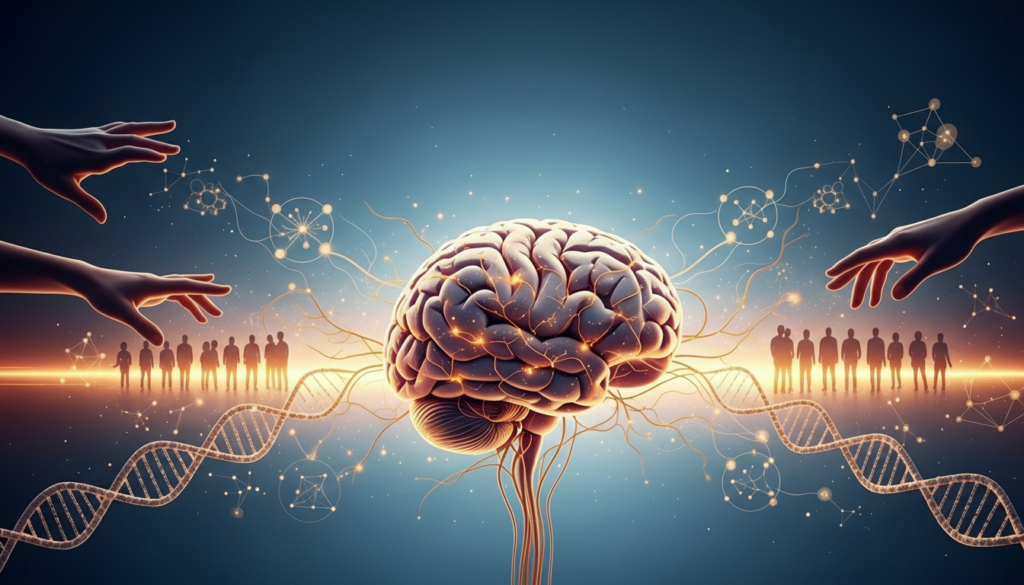
This isn’t just soft, feel-good stuff. The science is crystal clear: human beings are hardwired for connection. Research from UCLA shows that social pain like rejection, loneliness, or loss activates the same brain regions as physical pain. That means being emotionally unsupported literally hurts your body in the same way a broken bone does.
Even more striking. A landmark meta-analysis published in PLOS Medicine, which reviewed data from over 308,000 participants, found that people with strong social support networks had a 50% greater chance of survival over a given period compared to those with weaker connections. To put it bluntly: emotional support can save your life.
Our nervous systems are designed to co-regulate. When you’re in distress, being near a calm, caring person actually helps your heart rate slow down and your cortisol levels drop. This is why babies stop crying when held, why soldiers experience PTSD differently when they have unit cohesion, and why patients recover faster from surgery when they have family nearby. Connection is medicine.
Loneliness: America’s Hidden Epidemic
Despite living in the most connected era in human history with smartphones, social media, and instant messaging the United States is facing a loneliness crisis. The U.S. Surgeon General declared in 2023 that loneliness and social isolation are a public health epidemic, comparable in health risk to smoking up to 15 cigarettes a day.
According to a Cigna study, more than half of Americans report feeling lonely sometimes or always. Young adults aged 18-22 are actually the loneliest generation of all despite being the most digitally connected. The paradox is real: we have hundreds of ‘followers’ and still feel unseen.
Key warning signs that someone is emotionally unsupported include:
- Feeling invisible or unheard in relationships
- Believing that no one truly understands them
- Avoiding social situations due to fear of vulnerability
- Turning to unhealthy coping mechanisms like excessive drinking or binge eating
- Feeling emotionally numb or disconnected from daily life
Mental Health Impact With vs. Without Emotional Support
Mental Health Condition | Without Emotional Support | With Emotional Support |
Depression | Worsened isolation, higher risk of crisis | Faster recovery, fewer relapses |
Anxiety | Chronic worry, avoidance behaviors | Better coping, improved resilience |
Grief / Loss | Prolonged mourning, physical symptoms | Healthier processing, shorter grief cycles |
Work Burnout | Disengagement, health issues | Re-engagement, restored motivation |
Why Emotional Support Matters at Every Stage of Life
One of the biggest misconceptions Americans carry is that needing emotional support is a sign of weakness. We live in a culture that praises self-reliance, hustle, and stoicism especially for men. But here’s the truth: needing support is not weakness. It is the most human thing about us.
In Childhood and Adolescence
Children who receive consistent emotional support from parents and caregivers develop healthier brains. Secure attachment the bond formed when a child knows their emotional needs will be met lays the groundwork for better stress regulation, healthier relationships, and stronger resilience throughout life. Kids who lack this support are more likely to develop anxiety, depression, and behavourial issues.
According to the American Psychological Association, adolescents who feel supported by at least one trusted adult are significantly less likely to experience mental health crises. In a country where teen suicide rates have risen sharply over the past decade, this is not a statistic to ignore.
In Adulthood
The pressure Americans face in adulthood is immense financial stress, relationship challenges, career demands, and the often invisible weight of ‘keeping it together.’ Emotional support during these years helps adults process grief, navigate change, and maintain mental wellness without hitting crisis points.
For parents, emotional support is especially critical. Parenting is one of the most emotionally demanding jobs in the world, yet it’s the one most people receive the least training or support for. Postpartum depression affects roughly 1 in 5 new mothers and 1 in 10 new fathers in the U.S. and emotional support from partners, family, and community is one of the most effective protective factors.
In Older Adults and Seniors
Social isolation among seniors is a growing crisis in America. As people age, they often lose spouses, friends, and community connections. Studies show that lonely seniors have a 64% increased risk of developing clinical dementia and significantly higher rates of cardiovascular disease. Regular emotional support even a weekly phone call or visit can dramatically improve quality of life and cognitive health in aging populations.
Signs Someone Needs Emotional Support
Behavourial Signs | Emotional Signs | Physical Signs |
Withdrawing from friends/family | Feeling hopeless or worthless | Fatigue, low energy |
Losing interest in hobbies | Frequent sadness or irritability | Disrupted sleep patterns |
Neglecting responsibilities | Feeling overwhelmed constantly | Unexplained aches or headaches |
Increased substance use | Emotional numbness | Changes in appetite or weight |
How to Give (and Ask For) Emotional Support
Many Americans struggle both with asking for support and giving it well. We’re conditioned to say ‘I’m fine’ when we’re not, and to offer unsolicited advice when a friend actually needs us to just listen.
How to Give Emotional Support
- Listen first resist the urge to immediately problem-solve
- Ask open-ended questions like ‘How are you really doing?’ or ‘What do you need from me right now?’
- Reflect feelings back without judgment: ‘That sounds incredibly hard’
- Don’t compare their pain to yours or someone else’s
- Check in consistently not just in the acute moment of crisis
- Respect boundaries and don’t push them to open up before they’re ready
How to Ask for Emotional Support
This one’s harder for many of us especially in a culture that prizes independence. But asking for help is an act of courage, not weakness. Here’s how to do it:
- Be specific about what you need: ‘I don’t need advice I just need to vent’
- Choose the right person someone safe, non-judgmental, and trustworthy
- Be honest about your emotional state: ‘I’m really struggling right now’
- If in-person feels too vulnerable, start with a text or phone call
- Consider professional support therapy is not only for crisis situations
The Role of Professional Emotional Support

Therapy, counselling, and support groups are powerful tools that millions of Americans are still hesitant to access often because of lingering stigma or financial barriers. But attitudes are shifting, especially among younger generations. The American Psychological Association reports that therapy-seeking has increased significantly since 2020, with telehealth platforms making it more accessible than ever. But professional help doesn’t replace emotional support it complements it. Research consistently shows that emotional support improves health outcomes across anxiety, depression, grief, and chronic stress
If you’re unsure where to start, here are some accessible options available across the United States:
- Psychology Today’s therapist finder search by location, insurance, and specialty
- BetterHelp and Talkspace — online therapy platforms with flexible pricing
- NAMI (National Alliance on Mental Illness) free helpline and peer support groups
- Community mental health centers often provide sliding-scale fees for low-income individuals
- Employee Assistance Programs (EAPs) — many employers offer free counseling sessions
Building a Culture of Emotional Support
Ultimately, emotional support isn’t just an individual practice — it’s a cultural one. And America has the opportunity to do better. When we normalize conversations about mental health, when we teach kids that emotions are not weaknesses, when we create workplaces where people can say ‘I’m struggling’ without fear we build a healthier society for everyone.
This means:
- Advocating for mental health days at work
- Checking in on the ‘strong’ friend the one who always seems fine
- Teaching emotional intelligence in schools
- Supporting community programs that reduce social isolation
- Breaking the stigma around therapy and emotional vulnerability, especially for men
Final Thoughts
Here’s what we want you to take away from all of this: human beings were never designed to be emotionally self-sufficient. Our brains, our biology, and our history all point to the same truth we are social creatures who need one another to thrive.
In a world that often tells you to ‘push through,’ ‘stay strong,’ and ‘figure it out,’ choosing to seek or offer emotional support is a radical and powerful act. It’s one of the most human things you can do.
Whether you’re the person reaching out or the person showing up you matter. Your presence, your empathy, and your willingness to connect are some of the most powerful gifts you can offer. Don’t underestimate them.
Take care of yourself. Take care of each other. That’s not just self-help advice it’s science, it’s community, and it’s one of the best investments you’ll ever make in your well-being and the well-being of those around you.