

Anonymous conversations mental health by giving people a safe, judgment free space to openly express their thoughts, fears, and struggles without the fear of being identified or stigmatized. Research consistently shows that millions of Americans avoid seeking mental health support simply because they are afraid of what others will think of them. Anonymous platforms remove that barrier entirely, allowing users to speak freely and receive emotional support, guidance, or simply a listening ear without revealing who they are.
In the United States alone, more than 57 million adults live with a mental health condition, yet less than half ever receive professional care. Anonymous conversations through online forums, crisis text lines, peer support apps, and therapy platforms are closing that gap in a powerful way. By creating a space where identity does not matter, these conversations make mental health support more accessible, more honest, and far more effective for people who would otherwise suffer in silence.
Why Americans Are Turning to Anonymous Mental Health Support
Mental health is one of the most personal and sensitive topics a person can face. For millions of Americans, the idea of talking to someone they know about anxiety, depression, trauma, or suicidal thoughts feels impossible. The fear of being judged, misunderstood, labeled, or treated differently holds people back from getting the help they genuinely need.
This is where anonymous conversations step in as a game changer.
Whether it is a stranger on a mental health forum, a volunteer counselor on a crisis text line, or an AI-powered wellness app that never asks for your name, anonymous support has become one of the most widely used and respected forms of mental health assistance in America today.
The concept is simple. When you know that nobody can trace what you are saying back to you, you talk more honestly. You open up about things you have never told anyone. You stop filtering your pain through the lens of what people might think. That honesty is often the first and most important step toward healing. Understanding the full scope of what anonymous emotional support can look like helps people realize how many options they actually have available to them.
The Science Behind Why Anonymity Supports Mental Wellness
Psychologists have studied the relationship between anonymity and emotional disclosure for decades. The findings are clear. When people feel anonymous, they experience what researchers call the online disinhibition effect. This means they are more willing to share sensitive, personal, and emotionally raw information than they would in face-to-face conversations.
This is not about hiding. It is about removing the social performance aspect of sharing your pain. In real-world conversations, people constantly monitor how they are being perceived. They soften their words, omit embarrassing details, or pretend to feel better than they do. Anonymity removes all of that.
A study published in the Journal of Medical Internet Research found that people using anonymous online mental health platforms reported significantly higher levels of emotional disclosure compared to those in traditional therapy settings. That disclosure is directly linked to better therapeutic outcomes.
Here is how anonymity supports mental health from a scientific standpoint:
- It reduces shame and self-censorship, allowing deeper emotional processing
- It activates the brain’s problem-solving mode rather than its threat response
- It encourages people who have never sought help before to take that first step
- It creates a sense of community and shared experience that combats isolation
- It lowers cortisol levels by reducing the social anxiety tied to disclosure
Key Benefits of Anonymous Conversations for Mental Health

1. Breaking Down the Stigma Barrier
Mental health stigma remains one of the biggest public health crises in the United States. According to the National Alliance on Mental Illness, stigma is the number one reason people delay or avoid mental health treatment. Anonymous conversations directly attack stigma at its root by making it possible to seek help without any social consequences.
When there is no name attached to your struggle, there is no reputation at stake. That freedom changes everything for someone who has been carrying their pain alone for years.
2. 24 or 7 Access to Emotional Support
Mental health crises do not follow business hours. Anxiety attacks happen at 2 AM. Depressive episodes hit hardest on Sunday afternoons. Anonymous mental health platforms and crisis lines like Crisis Text Line, 7 Cups, and the 988 Suicide and Crisis Lifeline operate around the clock, meaning support is always available the moment someone needs it most.
This constant accessibility is especially critical in rural America, where mental health professionals are scarce and wait times for appointments can stretch for months.
3. A Gateway to Professional Treatment
One of the most powerful functions of anonymous conversations is that they serve as a bridge. Many people who would never make an appointment with a therapist will open up in an anonymous chat room or text line. That first experience of being heard without judgment often becomes the motivation to take the next step and seek professional help.
Research consistently backs up the benefits of talking to someone when you are struggling, even when that first conversation happens completely anonymously. Anonymous platforms plant the seed. Professional care helps it grow.
4. Support for Marginalized and Underserved Communities
LGBTQ+ individuals, people of color, immigrants, and other marginalized groups in America face compounded layers of stigma around mental health. For many of these communities, speaking openly about mental health within their own cultural or social circles carries serious social risk.
Anonymous conversations create a space where identity intersects with struggle in a protected way, where someone can talk about being gay and depressed, or undocumented and anxious, without fear of discrimination or exposure.
Types of Anonymous Mental Health Conversations Available in the USA
There are several well established formats for anonymous mental health support in the United States. Understanding your options helps you find the right fit.
| Platform Type | How It Works | Best For |
|---|---|---|
| Crisis Text Lines | Text a keyword to a short code and connect with a trained counselor | Immediate emotional crisis support |
| Peer Support Forums | Anonymous usernames on moderated communities like Reddit’s r/mentalhealth | Ongoing community support and shared experience |
| Anonymous Therapy Apps | Apps like 7 Cups or Talkspace with anonymous onboarding | Structured emotional support without full identity disclosure |
| AI Wellness Chatbots | Apps like Woebot that provide CBT-based conversations anonymously | Daily mental health maintenance and skill building |
| Anonymous Phone Hotlines | Confidential voice calls to trained volunteers or professionals | People who prefer speaking over typing |
How Anonymous Conversations Compare to Traditional Therapy
Traditional therapy is incredibly effective and remains the gold standard for mental health treatment. However, it comes with barriers that anonymous conversations do not have. Understanding the difference helps people make smarter choices about their mental health journey.
| Factor | Traditional Therapy | Anonymous Conversations |
|---|---|---|
| Cost | Dollar 100 to Dollar 300 per session without insurance | Free to low cost on most platforms |
| Identity Required | Yes, full disclosure needed | No, complete anonymity possible |
| Wait Time | Days to weeks for an appointment | Immediate access in most cases |
| Stigma Risk | Higher due to known identity | Minimal to none |
| Depth of Treatment | Comprehensive and ongoing | Supportive but may be limited in clinical scope |
| Availability | Limited by location and hours | 24 or 7 from anywhere with internet |
The takeaway is that anonymous conversations are not a replacement for professional therapy. They are a complement, a first step, a safety net, and an always available resource that keeps people connected to support between sessions or when professional care is not yet accessible.
Who Benefits Most from Anonymous Mental Health Support
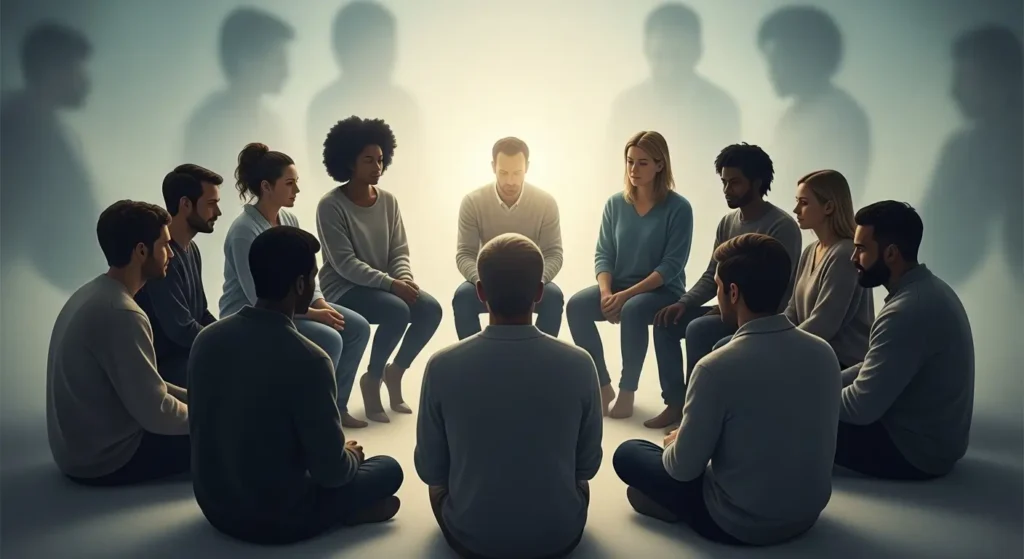
Anonymous conversations are helpful for a wide range of people, but research and real-world data show that certain groups benefit especially strongly.
- Teenagers and young adults who fear parental judgment or social ridicule at school
- Men in America who are socialized to suppress emotions and see therapy as a sign of weakness
- Veterans struggling with PTSD who find it difficult to open up in group or clinical settings
- Survivors of abuse or sexual assault who are not ready to attach their name to their story
- People in highly visible professional roles such as doctors, lawyers, and executives who fear career consequences
- First-time help-seekers who have never spoken to anyone about their mental health before
- People in areas of the country with limited access to licensed mental health professionals
For all of these groups, the anonymous setting does not just lower the bar to seek help. It removes it entirely.
Real Talk: What Happens in an Anonymous Mental Health Conversation
Many people are curious but unsure about what anonymous mental health support actually looks like in practice. Here is a clear picture.
When someone reaches out through a platform like Crisis Text Line, they text HOME to 741741 from any phone in the US. Within minutes, they are connected to a trained crisis counselor. There is no name required, no insurance information, no appointment. The conversation is private and confidential.
The counselor listens, validates, helps the person identify what they are feeling, and works through a collaborative plan for safety and next steps. For someone in their first mental health crisis, that conversation can be lifesaving.
On peer support platforms, users create anonymous usernames and post about their struggles in moderated communities. Others who have faced similar experiences respond with empathy, resources, and personal insight. That peer validation, knowing you are not alone, is deeply therapeutic even without a clinical framework.
The Role of Technology in Expanding Anonymous Mental Health Access
Technology has dramatically expanded the reach and effectiveness of anonymous mental health conversations in the past decade. AI-powered mental health apps now offer cognitive behavioral therapy techniques, mood tracking, and crisis intervention through anonymous interfaces that millions of Americans use every day.
The rise of telehealth has also made it possible for people to receive licensed therapy services with greater privacy protections than ever before. Many platforms allow users to begin with anonymous intake processes before deciding whether to share more personal information with their provider.
This tech driven expansion is especially significant for Gen Z and Millennials, two generations that are simultaneously the most likely to struggle with mental health challenges and the most comfortable seeking help through digital platforms.
| Technology | Mental Health Function | User Base in USA |
|---|---|---|
| AI Chatbots (Woebot, Wysa) | CBT based daily check-ins and coping tools | 5+ million users |
| Crisis Text Line | Immediate anonymous crisis counseling | 8+ million conversations since launch |
| 7 Cups | Anonymous listener network plus therapist access | 400,000+ active users |
| Reddit Mental Health Communities | Peer support through anonymous usernames | Tens of millions of monthly visitors |
| 988 Lifeline (Phone and Chat) | Immediate crisis intervention | 5+ million contacts annually |
How to Get Started with Anonymous Mental Health Support
Taking that first step is the hardest part. Here is how to begin accessing anonymous mental health conversations today, no matter where you are in the United States.
- Text HOME to 741741 to connect with Crisis Text Line for immediate support
- Visit 7cups.com and start talking to a free anonymous listener within minutes
- Download Woebot or Wysa from the App Store or Google Play for daily AI-powered mental wellness support
- Visit 988lifeline.org to chat anonymously with a trained crisis counselor
- Join r/mentalhealth, r/anxiety, or r/depression on Reddit using an anonymous username to connect with peer support communities
- Search for anonymous group therapy options through the NAMI HelpLine at 1-800-950-6264
- Book an anonymous emotional therapy session with a licensed professional where your privacy is fully protected from the very first conversation
Addressing Common Concerns About Anonymous Mental Health Conversations

Some people worry about the quality and safety of anonymous mental health support. These are valid questions, and they deserve clear answers.
Is it safe? Reputable platforms train their counselors and moderators rigorously. Crisis text lines follow clinical protocols. AI wellness apps are built with licensed mental health professionals. While anonymous platforms are not a substitute for clinical care in serious cases, they operate with genuine regard for user safety.
Is it effective? Multiple peer-reviewed studies have confirmed that anonymous online mental health support reduces symptoms of anxiety and depression, improves coping skills, and increases the likelihood that someone will pursue professional treatment afterward.
Is it really confidential? Platforms like Crisis Text Line and 988 Lifeline are legally bound to confidentiality except in situations involving imminent risk to life. Users retain significant privacy protections that go beyond what many people realize.
Final Thoughts
The idea that you have to put your name on your pain before you can get help is one of the most damaging myths in American mental health culture. Millions of people are suffering right now who would benefit enormously from simply having a conversation with someone who listens without judging.
Anonymous conversations do not make mental health treatment less real. They make it more accessible. They meet people where they are, not where they wish they were. And for a country where 57 million adults live with mental illness but fewer than half receive care, that accessibility is not just helpful.
It is essential.
Whether you are in crisis tonight, quietly struggling for months, or simply looking for a space to process what you are going through, anonymous mental health conversations are available, free, and ready the moment you need them. You do not have to give your name to deserve support. You just have to reach out.