

You have 500 followers online, texts coming in all day, and video calls every week. Yet at night, you close your laptop and feel completely alone. This gap between constant digital contact and deep emotional emptiness is more common than most people admit. Emotional loneliness in digital relationships is one of the most quietly painful experiences of modern life, and it is growing faster than most of us realize.
According to a 2026 study published in Human Behavior and Emerging Technologies, digital platforms are not neutral communication tools. They actively shape how people form, maintain, and dissolve emotional bonds. The result is that millions of people are technically “connected” but feel entirely unseen.
What Is Emotional Loneliness in Digital Relationships?
Emotional loneliness is not the same as being physically alone. It is the feeling that no one truly knows you, understands you, or cares about your inner world. You can be surrounded by people, or surrounded by notifications, and still feel this way.
In digital relationships specifically, this form of loneliness develops when online interactions consistently lack depth, warmth, or genuine emotional reciprocity. A text reply is not the same as a heartfelt conversation. A “like” is not the same as being truly heard.
Researchers distinguish emotional loneliness from social loneliness. Social loneliness means you lack a social network. Emotional loneliness means you lack a close, emotionally safe bond. The two can exist independently. Someone might have dozens of online connections and still suffer deeply from emotional loneliness because none of those connections feel truly intimate.
Why Emotional Loneliness Is Increasing in the Digital Age
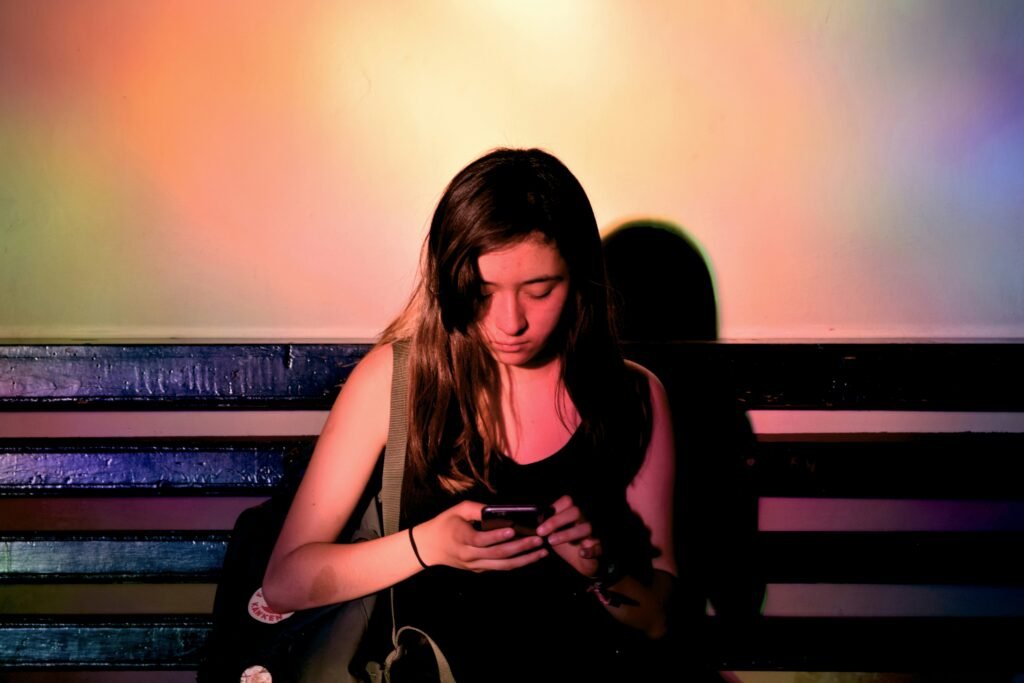
The irony of our era is sharp: we have never been more reachable, yet loneliness is rising faster than at any point in modern history.
A 2026 report found that 74% of Gen Z globally report feeling regularly lonely, even while surrounded by digital social circles. A separate CivicScience survey found that 57% of U.S. adults believe technology has directly contributed to their feelings of loneliness.
Several forces are at work here. Digital communication strips away many of the cues that make us feel emotionally present with another person: body language, vocal warmth, shared physical space, and uninterrupted attention. What remains is often a curated, filtered version of someone. You interact with their persona, not their person.
The result is a world where people are in constant contact but rarely in genuine connection. As one researcher put it, hyper connectivity has intensified feelings of loneliness and social isolation rather than curing them. You can explore more about how loneliness is evolving in the digital age and why modern communication patterns are making it worse.
Key Signs of Emotional Loneliness in Digital Relationships

Recognizing emotional loneliness early matters. The longer it goes unaddressed, the more it affects your mental health, self-esteem, and future relationships.
Emotional Warning Signs
- You feel hollow or drained after online conversations, even positive ones
- You often feel misunderstood, even by people you talk to regularly
- You go through the motions of replying but feel nothing is real
- You feel a deep sense of emptiness that online interaction does not fill
- You find yourself feeling alone even when you are not technically by yourself
Behavioral Warning Signs
- You spend more time scrolling to distract from the emptiness rather than to connect
- You feel relieved when plans or calls get cancelled because they feel pointless anyway
- You stop sharing how you truly feel, defaulting to surface-level responses
- You check your phone compulsively hoping for connection but feel nothing when messages arrive
Relationship Warning Signs
- Digital friendships feel transactional rather than meaningful
- You feel like you are performing for others rather than being with them
- Conversations stay shallow no matter how long they go on
- You feel lonely even with friends or within a relationship
Common Causes of Emotional Loneliness in Online Relationships
Understanding what causes emotional loneliness makes it easier to address. The roots are rarely simple, but several patterns appear consistently.
Main Causes of Emotional Loneliness in Digital Relationships
| Cause | How It Creates Loneliness | Who It Affects Most |
|---|---|---|
| Performative communication | People present an edited version of themselves, blocking real intimacy | Social media-heavy users |
| Lack of non-verbal cues | Text and even video removes the emotional depth of in-person presence | Remote workers, long-distance relationships |
| Passive scrolling replacing active connection | Consuming content feels social but provides no real exchange | Adults aged 18 to 35 |
| Ghosting and digital inconsistency | Unreliable contact creates anxiety and emotional withdrawal | Anyone in online friendships or dating |
| Fear of vulnerability online | People avoid emotional openness due to judgment, permanence of records | Introverts and trauma survivors |
| Parasocial relationships replacing real ones | One-sided bonds with creators or influencers substitute for real friendships | Gen Z, younger millennials |
1.Performative Self Presentation
Online, people tend to show the best version of themselves. This is natural and understandable. However, when everyone around you is doing this, you never get to know the real people behind the profiles. You connect with their highlight reel, and they connect with yours. Neither of you feels truly seen.
2.Absence of Physical Presence
Human beings are wired for physical closeness. Eye contact, tone of voice, touch, and shared physical space all release neurochemicals that text simply cannot replicate. Digital communication, no matter how frequent, cannot fully substitute for in person emotional experience. This is one reason that people who rely heavily on digital only relationships often feel emotionally disconnected without understanding why.
3.Ghosting and Unreliable Contact
Ghosting, the act of suddenly cutting off contact without explanation, has become common in digital relationships. Research reviewed in the 2026 Human Behavior and Emerging Technologies study found that ghosting consistently causes emotional distress, erodes trust, and deepens feelings of unworthiness. Even minor digital inconsistency, like a friend who replies enthusiastically one day and goes silent for weeks the next, creates the kind of unpredictability that makes emotional closeness feel unsafe.
4.Over Reliance on Passive Connection
There is a meaningful difference between scrolling through someone’s posts and actually talking to them. Many people mistake passive observation of another person’s digital life for genuine connection. It feels social. It is not. This habit quietly replaces the effort required to build real relationships.
The Real Cost of Untreated Emotional Loneliness
Emotional loneliness is not just uncomfortable. Over time, it causes measurable harm.
Research consistently links chronic emotional loneliness to increased risk of depression, anxiety, poor sleep, weakened immune function, and cognitive decline. Emotional loneliness has also been connected to negative self-views, distorted interpretations of relationships, and increasing social withdrawal.
There is also a compounding effect. The longer emotional loneliness persists, the harder real connection feels. People begin to believe that deep relationships are simply not available to them. They stop trying. They settle for surface-level interactions and digital substitutes.
Understanding how isolation affects mental health can help you recognize this pattern before it becomes entrenched.
Emotional Loneliness vs Social Loneliness
| Feature | Emotional Loneliness | Social Loneliness |
|---|---|---|
| Core need | A close, deeply known confidant | A broader social network |
| Can occur with many contacts | Yes | No (requires few or no contacts) |
| Primary feeling | Unseen, not truly known | Excluded, isolated |
| Common digital trigger | Shallow or performative relationships | No online community or few connections |
| Key solution | Deeper one-to-one vulnerability | Broader social engagement |
| Related mental health risk | Depression, low self-worth | Anxiety, social phobia |
The distinction matters because someone socially lonely needs to build more connections, while someone emotionally lonely needs to deepen existing ones. Applying the wrong solution does not help.
How to Overcome Emotional Loneliness in Digital Relationships

The good news is that emotional loneliness is not permanent. With the right steps, it is entirely possible to build digital relationships that feel genuinely meaningful, and to supplement them with the kind of in-person depth that human beings need.
Step 1: Name What You Are Feeling
Many people spend years in emotional loneliness without ever labeling it. They just feel vaguely bad, disconnected, or hollow. Naming the experience brings it into focus. Say it out loud or write it down: “I feel emotionally lonely. I am craving a connection where I am truly known.”
This is not weakness. It is clarity. And clarity is where change begins. If you struggle to identify your feelings in words, working on how to express your feelings is a useful starting point.
Step 2: Audit Your Digital Relationships
Not all digital relationships are equally shallow. Some may have real potential that has simply not been developed. Look at your regular connections and ask yourself honestly: which ones could become deeper with more vulnerability and more consistent effort?
You do not need to deepen all of them. Most people need only one or two truly close relationships to feel significantly less emotionally lonely.
Step 3: Move From Performing to Sharing
The most common barrier to depth in digital relationships is self editing. People share what makes them look good and hide what makes them feel vulnerable. Try sharing something real and imperfect with someone you trust. Tell them how you actually feel, not how you think you should feel.
This takes courage. However, vulnerability is the only path to genuine intimacy, in digital or face to face relationships alike.
Step 4: Stop Bottling Your Emotions
One of the quietest contributors to emotional loneliness is the habit of keeping feelings inside. When you consistently suppress what you feel, you train yourself and others to stay on the surface. Understanding the long-term effects of bottling up emotions can motivate you to change this pattern.
Sharing how you feel, even in small doses, creates the openings that deeper connection needs.
Step 5: Seek Conversations, Not Content
There is a meaningful difference between consuming content and having a real conversation. Make deliberate time for one-to-one conversations rather than group chats, comment threads, or passive scrolling. Voice or video calls add warmth that text cannot carry. In-person meetings, when possible, are even more valuable.
Quality matters far more than frequency. One real conversation is worth more than fifty brief message exchanges.
Step 6: Consider Talking to Someone
Sometimes emotional loneliness runs deep enough that it is hard to address alone. Talking to a trained listener, whether a therapist, counselor, or a supportive online platform, can make a significant difference. It is not about being broken. It is about taking your emotional health seriously.
Platforms that offer emotional support without requiring traditional therapy can be a practical and accessible first step. You can also explore late-night emotional support platforms if the loneliness tends to peak in quieter hours.
Step 7: Reconnect With Your Physical World
Digital relationships work best as a supplement to in-person connection, not a replacement for it. Even small steps help: a regular walk with a neighbor, joining a local group, or making time for in-person catch-ups with existing friends.
The goal is not to abandon digital life but to ensure it is one part of a broader social world.
Expert Tips to Protect Yourself From Emotional Loneliness Online
- Set specific times to check messages rather than constant passive availability
- Practice active listening in digital conversations, ask follow up questions and engage with what people actually share
- Be the first to be honest in a conversation; it gives the other person permission to do the same
- Avoid confusing the number of connections with the quality of them
- Recognize parasocial relationships (with creators, streamers, or influencers) for what they are: one-sided, and not a substitute for mutual connection
- If you feel mentally tired for no clear reason, consider whether emotional loneliness might be a contributing factor
Common Mistakes and What to Do Instead
| Mistake | Why It Backfires | Better Approach |
|---|---|---|
| Adding more contacts online | Quantity does not create depth; it dilutes attention further | Focus on deepening 1-2 existing relationships |
| Using AI companions as a primary source of connection | Heavy use correlates with increased loneliness over time | Use as a supplement, not a substitute |
| Waiting for others to reach out first | Passive waiting rarely produces deep connection | Take initiative in sharing and asking |
| Sharing vulnerability in large group settings | Public vulnerability often triggers performance, not reciprocity | Share one-to-one in trusted settings |
| Confusing digital busyness with social fulfillment | Being responsive is not the same as being connected | Schedule intentional, focused conversations |
Real Life Examples of Emotional Loneliness in Digital Relationships
Example 1: The Always Online Friend Group
A 28-year-old professional is part of a group chat that is active every day. They share memes, plan events, and check in casually. Yet she has never told any of them about her anxiety, her fear of failure, or how much she misses feeling known by someone. The chat is lively. The loneliness is quiet. She is socially present and emotionally invisible.
Example 2: The Long Distance Relationship
A couple maintains their relationship almost entirely through texting and twice weekly video calls. They are committed and affectionate online. Yet one partner begins to feel increasingly hollow. Something essential is missing. The digital interactions keep the relationship alive but cannot fully sustain the emotional depth both people need.
Example 3: The Remote Worker
Someone who transitioned to fully remote work has colleagues they interact with daily. Slack messages, Zoom calls, shared tasks. Yet after two years, they do not feel that a single work contact truly knows them as a person. Professional connection has replaced personal connection, and the result is a creeping sense of emotional invisibility.
All three of these people would benefit from understanding that talking to someone reduces anxiety and that the act of opening up, even once, changes the dynamic.
FAQs
What is the difference between feeling lonely and emotional loneliness?
General loneliness refers to a broad sense of isolation, while emotional loneliness specifically describes the absence of a close, deeply understanding relationship. You can feel emotionally lonely even when surrounded by people or active online communities.
Can digital relationships ever be truly emotionally fulfilling?
Yes, they can be, but only when both people are willing to be vulnerable, consistent, and genuinely present. Digital relationships that rely on curated self-presentation or passive interaction rarely develop the depth needed for emotional fulfillment.
Why do I feel lonely even when I have many online friends?
Having many contacts does not guarantee depth. Emotional fulfillment requires quality, not quantity. If your relationships stay surface-level regardless of how many there are, you are likely experiencing emotional loneliness.
Is emotional loneliness a sign of mental health problems?
Not necessarily. It is a common human experience, particularly in the current digital age. However, if it persists for a long time or is accompanied by depression, anxiety, or withdrawal, it is worth speaking to a mental health professional.
How can I tell if someone I care about is emotionally lonely?
Watch for withdrawal despite being active online, a tendency to keep conversations light no matter how close you are, or expressions of feeling misunderstood. Asking directly, with genuine care and without judgment, is often the most effective approach.
What is the fastest way to reduce emotional loneliness?
The most immediate step is to have one honest, unguarded conversation with someone you trust. Share something real. Ask how they truly are. Even a single moment of genuine connection can temporarily reduce the weight of emotional loneliness and open the door to more.
Conclusion
Emotional loneliness in digital relationships is not about how many followers you have or how often your phone buzzes. It is about whether anyone truly knows the real you, and whether you feel safe enough to let them.
The digital world is not going away, and it does not need to. But it works best as a complement to real depth, not a replacement for it. The path forward is not more contacts or more activity. It is more honesty, more vulnerability, and more willingness to have conversations that actually matter.
If you have been carrying this feeling quietly, that in itself is worth addressing. You deserve connections that feel real. Start with one honest conversation, and build from there.