

Emotional support for adults is one of the most powerful forces behind long term mental and physical health. When people feel genuinely heard, understood, and cared for, they are better able to handle stress, overcome adversity, and maintain a sense of purpose. Whether it comes from a friend, a family member, a therapist, or a support group, emotional support shapes how adults think, feel, and function every single day.
Research consistently shows that adults who receive regular emotional support report lower rates of depression and anxiety, stronger immune systems, and longer lives. In a country like the United States, where over 40 million adults experience anxiety disorders alone, understanding why emotional support matters is not just helpful. It is essential. This article breaks down the science, the benefits, the warning signs of its absence, and the most effective ways to build a strong support system.
What Is Emotional Support for Adults
Emotional support refers to the act of showing someone you care about how they feel. It goes beyond practical help. It involves active listening, empathy, validation, and presence. When someone is going through something difficult, emotional support communicates that they are not alone.
For adults, this looks different at various life stages. A 30-year-old dealing with career pressure needs a different kind of support than a 60-year-old navigating loss. But the core remains the same: feeling seen, heard, and valued.
The Four Main Types of Social Support
Psychologists often break down support into four categories. Here is how they compare:
| Type of Support | What It Includes | Best Suited For |
|---|---|---|
| Emotional Support | Listening, empathy, validation | Stress, grief, anxiety, loneliness |
| Informational Support | Advice, guidance, resources | Decision making, planning, problem solving |
| Tangible Support | Practical help, financial aid | Crisis situations, physical needs |
| Belonging Support | Community, shared activities | Isolation, low confidence, identity issues |
How Emotional Support Works in the Adult Brain
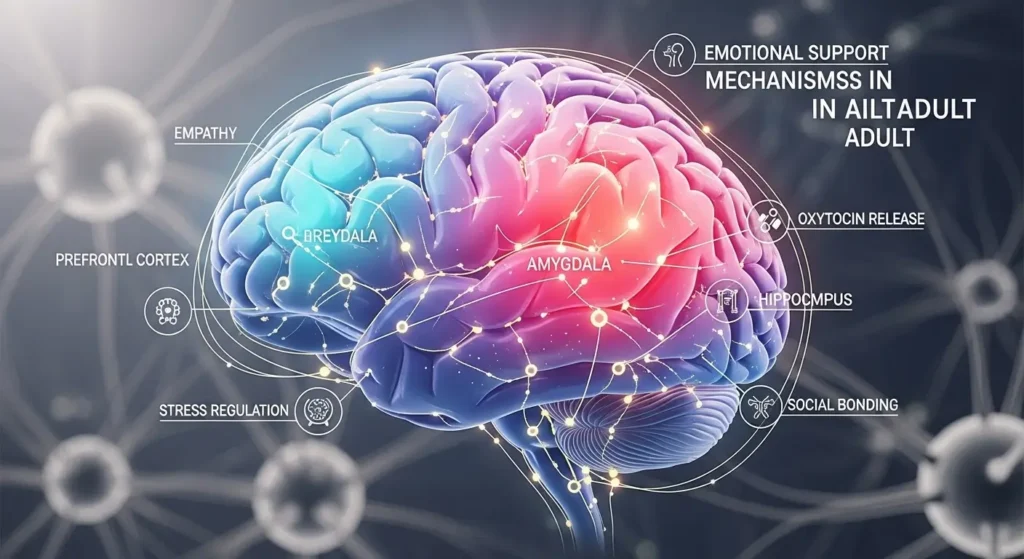
When a person receives emotional support, the brain releases oxytocin, often called the bonding hormone. This natural chemical reduces cortisol levels, which is the body’s primary stress hormone. The result is a calmer nervous system and a greater sense of safety.
Studies from UCLA and Harvard have shown that social connection activates the same reward pathways in the brain as food and water. In other words, humans are biologically wired to need emotional connection. When that need goes unmet, the brain responds similarly to physical pain.
For adults under chronic stress, like working parents, caregivers, or professionals, emotional support acts as a buffer. It does not remove the stressor. But it makes the stressor more manageable. This is also why talking to someone reduces anxiety so effectively even a single honest conversation can interrupt the cycle of stress before it takes a deeper hold.
Key Benefits of Emotional Support for Adults
The benefits of emotional support are not just psychological. They show up in physical health, workplace performance, and relationship quality.
Mental Health Benefits
- Reduces symptoms of anxiety and depression
- Builds emotional resilience over time
- Helps process grief, trauma, and loss
- Increases self-worth and confidence
- Lowers the risk of burnout
Physical Health Benefits
- Strengthens the immune system
- Lowers blood pressure and heart rate
- Reduces inflammation linked to chronic disease
- Promotes better sleep quality
- Linked to longer life expectancy
Life With and Without Emotional Support
The difference between having and not having emotional support is significant. Here is a side by side look:
| Without Emotional Support | With Emotional Support |
|---|---|
| Higher risk of depression | Improved mood and resilience |
| Chronic stress and burnout | Better stress management |
| Weakened immune system | Stronger immune response |
| Poor decision making | Clearer thinking and focus |
| Social withdrawal | Stronger relationships |
| Higher risk of substance use | Healthier coping habits |
Real Life Scenarios Where Emotional Support Makes the Difference

Understanding this concept becomes easier when we look at real situations that American adults face every day.
Scenario 1: Job Loss When someone loses their job, the fear of financial instability is real. But often, what hurts most is the sense of identity loss. A friend who listens without judgment, validates the fear, and reminds them of their strengths can be more valuable than a job listing in that moment.
Scenario 2: Divorce or Relationship Breakdown Adults going through divorce often feel shame, failure, and deep loneliness. Emotional support from family or a therapist helps them process these feelings without getting stuck in them. Without that support, many turn to unhealthy coping behaviors like alcohol or isolation.
Scenario 3: Parenting Stress American parents, especially mothers, report record levels of burnout. When parents feel supported, whether by a partner, community, or a parenting group, they are more patient, more present, and less likely to experience depression.
Scenario 4: Grief and Loss Losing a parent or partner is one of the most painful experiences an adult can face. Studies show that bereaved adults with strong emotional support networks recover their baseline wellbeing faster than those who grieve alone. For many, the hardest part is not knowing where to turn and simply choosing to talk to someone when feeling lonely during those dark moments can be the first step toward healing. The support does not erase the pain, but it makes the journey through it bearable.
Common Mistakes Adults Make Around Emotional Support
Many adults struggle to either give or receive emotional support effectively. Here are the most frequent mistakes:
Mistake 1: Jumping Straight to Problem-Solving When someone shares pain, the natural instinct is often to fix it. But most of the time, people need to feel understood before they want solutions. Offering unsolicited advice can make the other person feel dismissed.
Mistake 2: Downplaying Feelings Saying things like things could be worse or at least you still have X invalidates how someone feels. It cuts off connection rather than building it.
Mistake 3: Avoiding Vulnerability Many adults, especially men, are conditioned to believe that asking for support is weakness. This cultural belief leads to silent suffering. Asking for help is actually a sign of self awareness and strength.
Mistake 4: Relying on One Single Source Placing all emotional needs on one person, typically a romantic partner, puts immense pressure on that relationship. A healthy support system is diverse and includes friends, family, community, and professionals.
Tips and Best Practices for Building Strong Emotional Support

For Giving Support
- Practice active listening without interrupting
- Validate feelings before offering any advice
- Ask what kind of support the person needs
- Be consistent and follow through on your presence
- Avoid making the conversation about yourself
For Seeking Support
- Be specific about what you need from someone
- Do not wait until you are in crisis to reach out
- Consider therapy as a professional, judgment-free option
- Join community groups around shared interests or challenges
- Practice self-compassion so you feel worthy of support
Building a Long Term Support Network
- Invest regularly in relationships, not just during difficult times
- Diversify your sources of support across different areas of life
- Check in on others proactively, which encourages reciprocity
- Use digital tools and apps designed for mental wellness support
- Set boundaries to protect your energy while staying connected
When Professional Emotional Support Is the Right Choice
There are times when friends and family simply are not equipped to provide what someone needs. A licensed therapist, counsellor, or psychologist offers a structured, confidential, and clinically informed space for healing. If you are unsure where to begin, it helps to first recognize the signs you need someone to talk to things like persistent overwhelm, emotional numbness, or withdrawing from people you care about are all signals worth taking seriously.
In the U.S., options like online therapy platforms such as BetterHelp and Talkspace have made professional support more accessible and affordable than ever. Employee Assistance Programs, or EAPs, also offer free counseling sessions through many workplaces.
If you are experiencing prolonged sadness, panic attacks, relationship breakdowns, or thoughts of self-harm, professional emotional support is not optional. It is necessary.
Conclusion
Emotional support for adults is not a luxury. It is a fundamental human need backed by decades of research in psychology, neuroscience, and public health. Adults who are emotionally supported live longer, work better, love more fully, and recover faster from setbacks.
In a culture that often celebrates independence and pushes people to tough it out, choosing to build and lean on a support system is one of the bravest and smartest things a person can do.
Key Takeaways
- Emotional support reduces anxiety, depression, and physical illness in adults
- The brain is biologically wired to need connection and emotional safety
- Four types of support exist: emotional, informational, tangible, and belonging
- Common mistakes include problem solving too quickly and avoiding vulnerability
- A strong support network is diverse and includes both personal and professional resources
- Asking for help is a strength, not a weakness
- Professional support through therapy is often the most effective option for deep struggles
FAQs
1.What is emotional support for adults?
Emotional support for adults means having someone who listens, understands, and helps you process your thoughts and feelings. It can come from friends, family, or professional support services like therapy.
2.Why is emotional support important for adults?
Emotional support helps adults manage stress, reduce anxiety, and maintain mental health. It improves decision-making, relationships, and overall emotional stability in daily life.
3.What happens if adults don’t get emotional support?
Lack of emotional support can lead to stress, burnout, depression, anxiety, and emotional isolation. Over time, it can affect both mental and physical health.
4.How can adults get emotional support?
Adults can get emotional support by talking to trusted people, joining support groups, or using online platforms like Hear Inside that offer safe and private emotional support services.
5.Can emotional support improve mental health?
Yes. Emotional support plays a key role in improving mental health. It helps people express emotions, reduce negative thoughts, and feel more balanced and in control.
6.Is online emotional support effective for adults?
Online emotional support is effective because it offers privacy, flexibility, and easy access. Many adults feel more comfortable opening up in a safe online environment.