
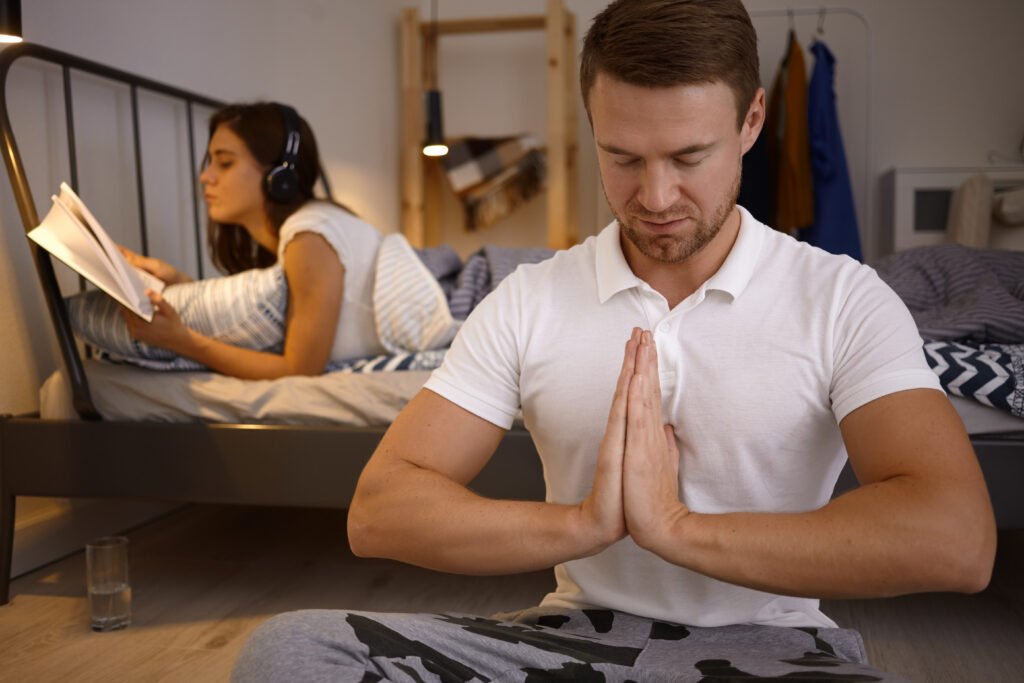
Have you ever said something in anger and wished you could take it back a few minutes later? Maybe someone criticized you, ignored your message, interrupted you, or said something that hurt your feelings. Before you had time to think, you reacted. Later, you realized that you wanted to handle the situation differently.
Learning how to respond and not react is not about becoming emotionless or pretending that nothing bothers you. It is about creating a small space between what happens, what you feel, and what you choose to do next. Emotional regulation involves noticing, understanding, and managing emotions in a way that fits the situation rather than allowing an intense feeling to automatically control your behavior.
What Does It Mean to Respond and Not React?
Reacting and responding can look similar from the outside, but there is an important difference.
A reaction is usually immediate. Something happens, an emotion rises, and you act before you have fully considered what you want to say or do.
A response includes a moment of choice. You still experience the emotion, but you give yourself enough time to understand it and decide how you want to behave.
For example, imagine someone sends you a short message that says, “Fine.”
You might immediately think they are angry with you and respond:
“Why are you always rude to me?”
That is a reaction based partly on an assumption.
A more thoughtful response might be:
“Your message seemed a little distant. Is something wrong?”
You have not ignored your feelings. You have simply chosen to investigate the situation before deciding what it means.
Reacting vs. Responding
| Reacting | Responding |
|---|---|
| Happens quickly | Includes a pause |
| Often driven by intense emotion | Allows more deliberate choice |
| May rely on assumptions | Checks facts and context |
| Can escalate conflict | Can create room for discussion |
| May lead to regret | Is more intentional |
| Focuses on the immediate moment | Considers the desired outcome |
Responding does not mean being passive. You can still disagree, set boundaries, say no, express anger, or walk away from an unhealthy conversation. The difference is that your action is more deliberate.
Why Do We React So Quickly?
Strong emotions can make it harder to slow down and think clearly. Stress, lack of sleep, difficult experiences, relationship conflicts, fear, frustration, and repeated pressure can all influence how easily you become emotionally activated. The American Psychiatric Association notes that factors such as life experiences, chronic stress, sleep, environment, and other circumstances can affect emotional regulation.
Your reaction may also be connected to a personal trigger.
For example, if being ignored has been painful for you in the past, a delayed message might feel much more threatening than it objectively is. Your mind may quickly create a story:
“They haven’t replied.” → “They don’t care.” → “I’m being rejected.” → “I need to respond now.”
The first statement is a fact. The others may be interpretations.
Learning to recognize that difference can give you more control over your next action.
Comparison Table Of 10 Practical Ways to Respond and Not React
| # | Practical Way | Main Purpose | When to Use It | Simple Action |
|---|---|---|---|---|
| 1 | Pause Before You Speak | Immediate reaction ko slow karna | Jab gussa ya frustration suddenly increase ho | 5–10 seconds ruk kar saans lein |
| 2 | Name What You Are Feeling | Emotion ko identify karna | Jab aap confused, angry, hurt ya overwhelmed hon | “Main angry nahi, actually hurt feel kar raha hoon” |
| 3 | Notice Physical Warning Signs | Reaction ke early signals recognize karna | Jab body tense hone lage | Jaw, shoulders, breathing aur heart rate notice karein |
| 4 | Identify Your Trigger | Emotional reaction ka actual cause samajhna | Jab same situation repeatedly upset kare | “Exactly kis cheez ne mujhe trigger kiya?” poochein |
| 5 | Separate Facts From Assumptions | Overthinking aur unnecessary reactions kam karna | Jab aap kisi ki intention assume kar rahe hon | Jo fact hai aur jo assumption hai, dono alag karein |
| 6 | Ask What Outcome You Want | Conversation ko constructive direction dena | Argument ya difficult conversation mein | Decide karein: solution, explanation, boundary ya apology? |
| 7 | Choose Your Words Carefully | Conflict ko unnecessarily escalate hone se rokna | Jab aap emotionally charged hon | “You always…” ki jagah “I feel…” use karein |
| 8 | Listen Before Defending Yourself | Defensive reaction ko control karna | Jab koi criticism ya disagreement kare | Pehle complete baat sunen, phir answer dein |
| 9 | Give Yourself Permission to Step Away | Emotional intensity ko reduce karna | Jab conversation too heated ho jaye | “I need some time; we can discuss this later.” |
| 10 | Reflect After You React | Future reactions ko improve karna | Jab aap already react kar chuke hon | Trigger, emotion, response aur better alternative review karein |
1.Pause Before You Speak or Send a Message

The simplest way to stop an automatic reaction is to create a pause.
When you feel anger, frustration, embarrassment, or anxiety rising, do not immediately send the text, write the email, or continue the argument.
Take a few slow breaths. Put your phone down. Drink some water. Sit quietly for a moment.
You can also say:
“I need a moment to think about that.”
Or:
“I want to respond properly, so let me take a minute.”
A pause does not mean you are avoiding the problem. It gives you time to choose how you want to handle it. Mindfulness-based approaches commonly emphasize noticing emotional activation and creating space before responding.
2.Name What You Are Feeling
Before you can manage an emotion, it helps to identify it.
Instead of saying:
“I feel bad.”
Try to be more specific.
Are you:
- Angry?
- Hurt?
- Embarrassed?
- Rejected?
- Disappointed?
- Overwhelmed?
- Anxious?
- Jealous?
- Frustrated?
- Afraid?
Sometimes anger is only the emotion that appears on the surface. Underneath it may be disappointment, fear, insecurity, or feeling ignored.
For example:
“I’m angry because I feel dismissed.”
That sentence gives you more information than simply saying, “I’m angry.”
Naming the emotion does not make it disappear. It helps you understand what is happening so you can decide what to do with it.
3.Notice Your Physical Warning Signs
Your body may tell you that you are about to react before you consciously recognize the emotion.
You might notice:
- Tight shoulders
- Clenched jaw
- Faster breathing
- Racing thoughts
- Increased heart rate
- Feeling hot
- Restlessness
- A strong urge to interrupt
- Typing an angry message very quickly
These signs can become your personal warning system.
When you notice them, treat them as a signal to slow down.
Ask yourself:
“What is happening in my body right now?”
Then ask:
“What am I about to do because of this feeling?”
That small check-in can interrupt the automatic pattern.
4.Identify the Real Trigger
Sometimes the event that makes you react is not the real source of the emotion.
For example, your friend arrives 30 minutes late and you become extremely angry.
The immediate thought might be:
“They don’t respect my time.”
But perhaps the deeper issue is that you have repeatedly felt unimportant in the relationship.
Ask yourself:
“What exactly triggered me?”
You can also ask:
- What happened immediately before I became upset?
- What did I expect to happen?
- What meaning did I give the situation?
- Has something similar happened before?
- Am I reacting only to this moment, or to a pattern?
Understanding your triggers makes it easier to recognize them earlier next time.
5.Separate Facts From Assumptions

This is one of the most useful ways to reduce unnecessary emotional reactions.
Imagine that someone does not answer your message for several hours.
Fact
“They have not replied yet.”
Assumption
“They are deliberately ignoring me.”
Emotional reaction
“They don’t care about me.”
The assumption might be true, but you do not know that yet.
There could be many explanations: they may be busy, sleeping, working, dealing with a personal problem, or simply not have seen the message.
Before reacting, ask:
“What do I actually know?”
Then ask:
“What am I assuming?”
This does not mean ignoring your intuition. It means giving yourself enough space to distinguish evidence from interpretation.
6.Ask What Outcome You Want
When emotions are high, you may focus on what you want to say immediately.
A better question is:
“What outcome do I actually want?”
Maybe you want:
- To be understood
- To solve a problem
- To establish a boundary
- To receive an apology
- To explain how you feel
- To protect your time
- To end an argument respectfully
Knowing your desired outcome can change your response.
For example, if your goal is to solve a disagreement, insulting the other person is unlikely to move the conversation toward that goal.
Before speaking, ask:
“Will what I’m about to say help me achieve what I actually want?”
If the answer is no, pause and reconsider.
7.Choose Your Words Carefully
Responding instead of reacting does not mean keeping everything inside.
You can express difficult emotions directly while avoiding unnecessary blame.
Instead of:
“You never listen to me.”
Try:
“I feel frustrated when I am interrupted because I want to finish explaining my point.”
Instead of:
“You clearly don’t care.”
Try:
“I felt hurt when I didn’t hear back from you. Can we talk about what happened?”
Instead of:
“You’re impossible to talk to.”
Try:
“I don’t think we’re understanding each other right now. Can we slow down?”
The goal is not to make every sentence perfect. The goal is to communicate the actual issue without allowing the strongest emotion to choose your words for you.
8.Listen Before Defending Yourself

Sometimes we react because we are preparing our defense before the other person has finished speaking.
You may already be thinking:
“That’s not true.”
“But you did the same thing.”
“You don’t understand.”
Instead, try listening to the complete point first.
Listening does not mean agreeing.
You can understand someone’s perspective while still disagreeing with it.
Try asking:
“What do you mean by that?”
or:
“Can you explain what upset you?”
or:
“What would you like me to understand?”
Mindful approaches to difficult conversations emphasize noticing your own emotional state while making room to understand the other person’s perspective.
9. Give Yourself Permission to Step Away
Not every difficult conversation needs to be solved immediately.
If you are becoming too angry or overwhelmed to communicate clearly, take a temporary break.
You could say:
“I’m too frustrated to have this conversation properly right now. Can we continue later?”
Or:
“I want to talk about this, but I need some time to calm down first.”
The important part is to return to the conversation when appropriate rather than using “I need space” as a way to permanently avoid important issues.
Stepping away can prevent an emotional moment from turning into words or actions that create a bigger problem.
10. Reflect After You React
Even with practice, you will sometimes react.
That does not mean you have failed.
Instead of criticizing yourself, review what happened.
Ask:
- What triggered me?
- What emotion did I feel?
- What did I assume?
- What did I say or do?
- What was I actually trying to communicate?
- What could I do differently next time?
Reflection turns a difficult moment into information you can use later.
If you realize that you reacted harshly, you can also repair the situation.
For example:
“I was frustrated earlier, and I spoke more harshly than I should have. I’m sorry. I’d like to explain what was actually bothering me.”
Learning to respond better includes learning how to repair situations when you do not get it right.
How to Respond Instead of React in Real-Life Situations
Knowing the theory is useful, but practical examples make it easier to apply.
| Situation | Automatic reaction | More thoughtful response |
|---|---|---|
| Someone criticizes your work | “You don’t know what you’re talking about.” | “Can you explain what you think needs improvement?” |
| Someone does not reply | “You obviously don’t care.” | “I noticed I haven’t heard back. Is everything okay?” |
| Someone interrupts you | “Stop interrupting me!” | “I’d like to finish my point, then I’ll listen.” |
| Someone disagrees with you | “You’re completely wrong.” | “I see it differently. Can we compare our perspectives?” |
| A partner forgets something | “You never do anything right.” | “I felt frustrated when this was forgotten. Can we find a better system?” |
| Someone speaks disrespectfully | Insult them back | “I’m willing to discuss this, but not if we’re insulting each other.” |
The goal is not to use these exact sentences every time. Use them as models for turning an immediate emotional reaction into intentional communication.
Try the PAUSE Method
A simple framework can help you remember what to do when emotions become intense.
P — Pause
Do not immediately speak, text, post, or make a major decision.
A — Acknowledge
Notice what you are feeling.
“I’m angry.”
“I’m feeling rejected.”
“I’m overwhelmed.”
U — Understand
Ask what happened and separate facts from assumptions.
“What do I actually know?”
“What am I assuming?”
S — Select
Choose the outcome you want.
“Do I want to solve this, set a boundary, ask a question, or take space?”
E — Express
Communicate your response clearly and respectfully.
For example:
Trigger: A coworker criticizes your work.
Pause: Take a breath before answering.
Acknowledge: “I’m feeling defensive.”
Understand: “What specifically needs improvement?”
Select: Get useful feedback.
Express: “Thanks for pointing that out. I’ll review that section.”
This framework is similar to broader emotional-regulation approaches that emphasize stopping, observing the emotion, gaining perspective, and choosing a deliberate action.
Which Technique Should You Use?
Not every situation requires the same strategy.
| Situation | Helpful technique | Example |
|---|---|---|
| You feel angry | Pause and breathe | Wait before answering |
| You feel personally attacked | Check facts | Separate words from assumptions |
| You want to send an angry text | Delay the response | Write it, but review it later |
| An argument is escalating | Take space | Continue when calmer |
| You don’t understand someone’s intention | Ask a question | “What did you mean?” |
| You keep repeating the same reaction | Identify the trigger | Track the pattern |
| You need to establish a boundary | Communicate clearly | State what you will and won’t accept |
| You regret your reaction | Repair | Apologize and explain |
How to Practice Responding Every Day
You do not have to wait for a major argument to practice emotional regulation.
Start with small situations.
Practice 1: Daily emotional check-in
Once or twice a day, ask:
“What am I feeling right now?”
Then ask:
“What might I need?”
Practice 2: Delay emotional messages
If you are extremely upset, avoid sending a message immediately.
Read it again later and ask:
“Does this communicate what I actually mean?”
Practice 3: Track your triggers
Write down situations that repeatedly cause strong reactions.
Over time, you may notice patterns.
Practice 4: Practice calm responses in advance
Think about situations that commonly upset you and prepare a few sentences.
For example:
“I need a moment before I answer.”
“I understand you’re upset. Let’s talk about it calmly.”
“I disagree, but I’m willing to discuss it.”
Practice 5: Take care of your basic needs
Emotional regulation can become harder when you are exhausted, chronically stressed, or overwhelmed. The American Psychiatric Association recommends everyday supportive habits such as sleep, physical activity, slow breathing, staying present, and reaching out to trusted people as part of broader emotional coping.
Common Mistakes When Trying Not to React
Trying to stop reacting can sometimes turn into suppressing emotions.
These are not the same thing.
Emotional regulation means:
“I feel angry, but I can choose what to do with that anger.”
Emotional suppression can look like:
“I’m not allowed to be angry, so I’ll pretend nothing happened.”
You do not need to eliminate difficult emotions to respond well.
You can be angry and still communicate respectfully.
You can be hurt and still establish a boundary.
You can disagree and still listen.
You can need space and still return to the conversation.
The goal is not permanent calm. The goal is greater choice.
Final Thoughts
Learning how to respond and not react takes practice. You will not pause perfectly every time, and you will sometimes say something you wish you had phrased differently. That is part of being human.
What matters is gradually increasing the space between the trigger and your behavior. Notice the emotion, identify the trigger, check your assumptions, pause, decide what outcome you want, and then communicate intentionally. Emotional regulation is not about becoming emotionless; it is about experiencing emotions without automatically allowing them to determine your next action.
Related Article
Anonymous Venting Sites: 15 Safe Places to Vent Anonymously
Why Do I Feel Sad for No Reason? Possible Reasons Explained
What Does Depression Feel Like? Signs and Experiences Explained
Frequently Asked Questions
What does it mean to respond and not react?
It means creating a brief pause between an emotional trigger and your behavior. You still acknowledge the emotion, but you choose your words and actions more intentionally.
How can I stop reacting emotionally?
Start by noticing your early emotional and physical warning signs. Pause, breathe, identify the emotion, separate facts from assumptions, and choose your response based on the outcome you want.
Why do I react so quickly?
Stress, emotional triggers, past experiences, exhaustion, and difficult circumstances can all influence emotional regulation. Identifying your personal triggers can help you recognize when you are becoming activated.
How can I stay calm during an argument?
Try slowing the conversation down, taking a few breaths, listening before responding, and taking temporary space if the discussion becomes too heated. You can return to the conversation when you are better able to communicate clearly.
Is responding instead of reacting the same as suppressing emotions?
No. Responding means acknowledging your emotions and choosing what to do with them. Suppression involves pushing emotions away or pretending they are not there. Healthy emotional regulation does not require you to stop feeling difficult emotions.