

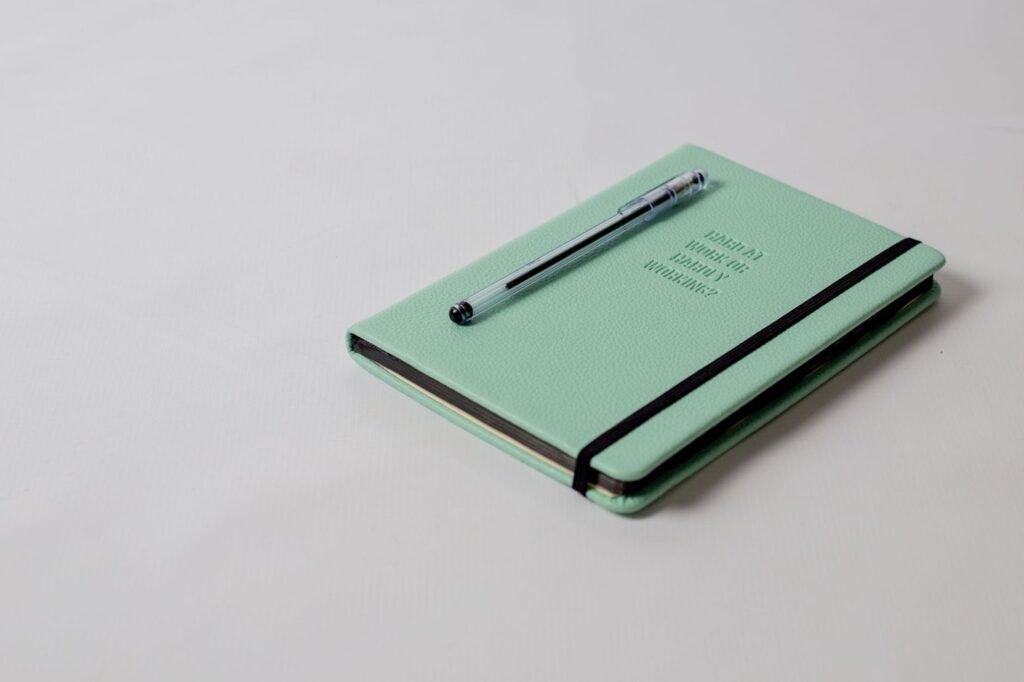
A brief written note can give a worry a place to wait while you return to your day. Photo by Alena Darmel on Pexels.
You finish the urgent work, check that everyone is home and finally sit down. Nothing needs your attention, yet you still feel as though you have forgotten something important. When one worry fades, another arrives.
Feeling worried when nothing obvious is wrong can happen when uncertainty, ongoing pressure or anxious thinking keeps taking up your attention. The feeling is real, but it does not prove that something bad is about to happen. There is no single explanation that fits everyone, and a blog cannot tell you whether you have an anxiety disorder.
“Nothing is wrong” may mean nothing is urgent
Look at the difference between your immediate situation and what has been occupying you lately. You might have no emergency today while still carrying concerns about money, a relationship or an approaching change. A problem does not need to be urgent to matter.
You may also be waiting for certainty that the situation cannot offer: whether a new role will work out, whether someone is pleased with you, or whether a decision was the best possible choice. Checking again can feel like preparation even when there is no new information to find.
The NHS guidance on anxiety describes a range of possible contributors, including work, family, finances and difficult experiences. It also advises against self-diagnosis. You do not need to identify a dramatic event before asking for help.

Find out what the worry is asking you to do
Instead of asking “Why am I like this?”, finish this sentence once: “Right now, I am afraid that…” Try to describe the concern in ordinary language. “Something feels off” might become “I am afraid I have missed a deadline.” That gives you something more specific to work with.
| What you notice | The one useful check | Where to stop |
|---|---|---|
| You remember a possible unpaid electricity bill while relaxing. | Look at the bill or payment confirmation once. | Paid: close the account page. Unpaid: arrange payment or note the deadline. |
| A meeting invite arrives with no agenda and you imagine losing your job. | Read the invite and ask for the agenda if you need it to prepare. | Prepare for the information you have; rehearsing dismissal scenarios supplies no new facts. |
| You feel uneasy on a quiet afternoon but cannot identify a problem. | Ask whether there is a specific unmet need or task you can name. | If nothing needs action, return to a chosen activity; discuss recurring distress with a professional. |
These are examples, not rules for dismissing genuine risks. If you discover an actual deadline, safety concern or unresolved disagreement, take a proportionate practical step. The question is whether another round of thinking will add anything useful.
Give worries a place in the day
The NHS suggests setting aside a short period to write down worries and distinguish things you can act on from hypothetical concerns. You can try ten or fifteen minutes at a time that suits you.
For example, write “Ask the landlord about the repair tomorrow” rather than carrying an open-ended instruction to sort out your entire housing situation. If a worry has no available action, leave it on the page without manufacturing another task. The purpose is to make room for the rest of your day, not to produce a perfect answer to every possibility.
If note-taking becomes another checking routine, simplify it. One sentence and one decision are enough. You do not need an elaborate journal or a score for how well you managed your thoughts.
Notice the pattern without monitoring yourself all day
For a few days, make a brief note of when the worry gets louder and what was happening beforehand. Was it after reading work messages, during unstructured time, or while waiting for someone? Record ordinary details rather than searching for a hidden explanation.
Notice when the worry gets louder. If it starts as you switch off the lights, overthinking at night may be the pattern to work on. If it follows a particular remark or situation, identifying what triggers that emotional response gives you a more specific starting point than monitoring yourself all day.
You can also tell someone: “I keep feeling on edge even when the day is going smoothly. I do not need you to check everything for me, but I would like some company.” That is a clearer request than asking them to promise that nothing will ever go wrong.
A quick “does this need action?” checklist
Use this once for a specific worry. Tick the items on paper; it is a decision aid, not a test of whether your feelings are justified.
- ☐ I can name the concern in one sentence.
- ☐ I have separated what happened from what I fear might happen.
- ☐ I have checked whether there is a real deadline or safety issue.
- ☐ If action is needed, I have chosen the next small step and when to take it.
- ☐ If no action is available, I have chosen what to return to now.
Worked example: “What if I forgot the electricity bill?” Check the payment record once. If it is paid, the task is complete. If it is unpaid, note the due date and arrange payment. Reopening the record without new information does not create another useful step.
If you keep repeating the checklist to feel completely certain, put it aside. The point is to finish a decision, not to add another checking routine.
When everyday worry deserves more support
Speak with a GP or qualified mental health professional if worry is persistent, difficult to manage, or interfering with sleep, work or relationships. Mention any physical symptoms, recent medication changes and changes in sleep. Do not assume new or worrying physical symptoms are simply anxiety.
You can bring a short description to an appointment: “This happens most days, I spend a lot of time checking, and it is making it hard to concentrate.” Specific examples are enough; you do not need to arrive with a diagnosis.
A listening conversation and professional treatment serve different purposes. Understanding when emotional support is enough and when therapy may be appropriate can help you choose your next step. Today, begin with one concern: decide whether it needs action, then make room for something beyond investigating how you feel.
Frequently asked questions
Can I feel worried without knowing the reason?
Yes. You may not immediately be able to name what is concerning you. Note when it happens and how it affects your day, rather than forcing an explanation. Persistent or disruptive worry is worth discussing with a healthcare professional.
Does feeling worried mean something bad is about to happen?
The feeling alone cannot establish that. Look for specific information you can act on. A genuine deadline or safety concern deserves attention; an uneasy feeling does not require you to investigate every part of your life.
What can I say when someone tells me to stop worrying?
Try: “I know there is no obvious emergency. I am still finding it hard to settle, and I would appreciate you listening for a few minutes.” You can ask for company without asking them to guarantee the future.