

If you are searching for someone who will listen to me, you are not alone. Millions of people in the United States struggle with stress, anxiety, loneliness, and emotional overload. The good news is that there are real, accessible ways to find people who will listen without judgment. These include friends, professional therapists, online support platforms, and trained listeners.
Finding someone who will listen is not just about talking. It is about being heard, understood, and supported. Whether you need emotional support during a tough time or simply want to share your thoughts, this guide shows exactly where to find the right listener and how to choose the best option for your situation.
What Does It Mean To Find Someone Who Will Listen To Me
Finding someone who will listen means connecting with a person who:
- Pays full attention without interrupting
- Does not judge or criticize
- Tries to understand your feelings
- Responds with care and empathy
This is called active listening. It helps reduce stress, improves emotional clarity, and supports mental health.
In simple terms, it is not about advice. It is about being understood.
Why People Search For Someone Who Will Listen

People often look for someone who will listen to them during:
- Stress from work or finances
- Relationship issues or breakups
- Anxiety or overthinking
- Loneliness or isolation
- Family conflicts
In the US, many people live fast paced lives. This makes it harder to find someone who has time to listen deeply.
Where To Find Someone Who Will Listen To You
1. Friends And Family
This is the first option most people try.
Best for:
- Everyday stress
- Quick emotional support
Pros:
- Free and familiar
- Easy access
Cons:
- May judge or give unwanted advice
- Not always available
Reality check:
Not all friends are good listeners. Many respond with solutions instead of understanding.
2. Professional Therapists And Counsellors
Licensed therapists are trained to listen and guide.
Best for:
- Anxiety, depression, trauma
- Long-term emotional issues
What you get:
- Structured sessions
- Evidence-based support
- Confidential conversations
Cost range in the US:
| Type of Therapy | Average Cost Per Session |
|---|---|
| In person therapy | $100 to $250 |
| Online therapy | $60 to $150 |
| Sliding scale therapy | $40 to $80 |
Key insight:
If your problem is recurring or affecting your life, this is the strongest option.
3. Online Emotional Support Platforms
This is one of the fastest-growing options in the US.
You can instantly connect with someone who will listen to you online. If you are not sure where to start, there are several ways to talk to someone online for free that require no commitment and can be done from your phone at any time of day.
Examples include:
- Emotional support platforms
- Listener-based chat services
- Anonymous support apps
Best for:
- Immediate support
- Late-night conversations
- Private sharing
How it works:
- Sign up
- Choose a listener
- Start chatting or calling
Benefits:
- No judgment
- Anonymous
- Available 24 by 7
4. Support Groups And Communities
These are groups of people going through similar situations.
Best for:
- Grief support
- Addiction recovery
- Mental health struggles
Types:
- In person local groups
- Online forums and communities
Advantages:
- Shared understanding
- Real-life experiences
Limitation:
- Less personal attention
5. Crisis Hotlines And Helplines
If you are overwhelmed, this is critical.
Best for:
- Emotional crisis
- Panic attacks
- Urgent mental health needs
Popular US options:
- 988 Suicide and Crisis Lifeline
- Crisis Text Line
What to expect:
- Immediate response
- Trained listeners
- Free and confidential
Best Options To Find Someone Who Will Listen
| Option | Speed | Cost | Privacy | Best Use Case |
|---|---|---|---|---|
| Friends and family | Fast | Free | Low | Daily stress |
| Therapist | Medium | High | High | Deep issues |
| Online platforms | Instant | Medium | High | Ongoing support |
| Support groups | Medium | Free | Medium | Shared struggles |
| Hotlines | Instant | Free | High | Crisis |
How It Works When You Talk To Someone Who Listens
The process is simple but powerful.
- You express what you feel
- The listener focuses fully on you
- They reflect your thoughts back
- You gain clarity and relief
This helps your brain process emotions better. Research shows that putting feelings into words reduces stress signals in the brain. In fact, one of the most consistent findings in emotional health is that sharing problems reduces stress by helping you externalize what your mind has been carrying alone.
Key Factors To Choose The Right Listener
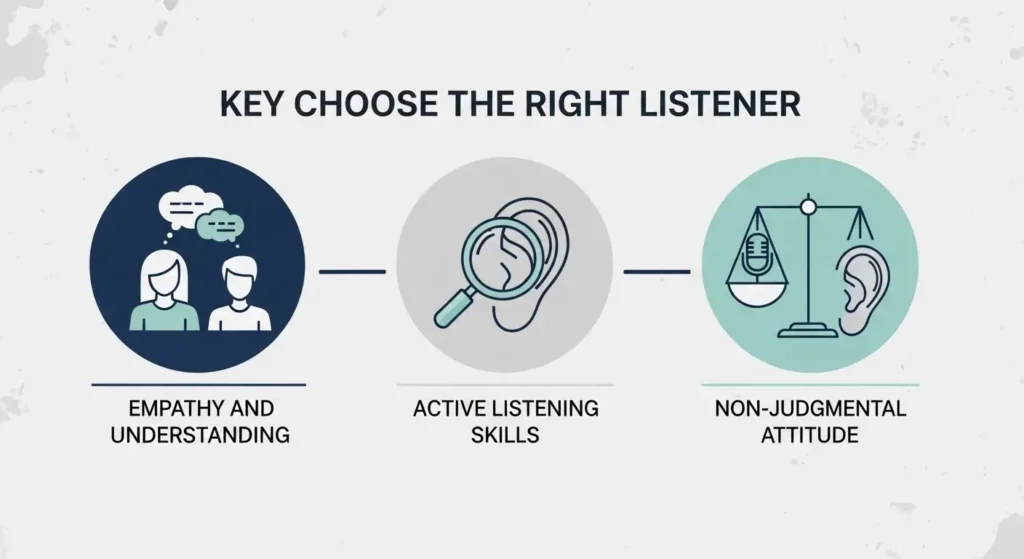
Not every listener is right for you.
Focus on these:
1. Trust
You should feel safe sharing personal thoughts.
2. Availability
Choose someone who is consistent and reliable.
3. Experience
For serious issues, trained professionals matter.
4. Communication Style
Some people listen quietly. Others engage more. Pick what works for you.
Real Life Scenarios
Scenario 1: Work Stress
You feel overwhelmed by deadlines. Unaddressed workplace pressure often builds into something harder to manage, and learning practical ways to release emotional stress can make a real difference before it affects your sleep or relationships.
Best option:
- Start with a friend
- Move to an online listener if needed
Scenario 2: Anxiety At Night
You cannot sleep because of overthinking.
Best option:
- Online support platform
- Anonymous chat
Scenario 3: Relationship Breakdown
You are dealing with emotional pain.
Best option:
- Therapist or counselor
Common Mistakes People Make
Expecting Everyone To Understand You
Not everyone has listening skills. This leads to frustration.
Choosing The Wrong Person
Talking to someone who judges or interrupts makes things worse.
Avoiding Professional Help
Serious issues need expert support. Ignoring this delays recovery.
Oversharing Too Quickly
Trust should be built step by step.
Tips To Find Someone Who Will Listen To You
- Start small with simple conversations
- Observe how the person responds
- Avoid people who interrupt or dismiss your feelings
- Use online platforms for instant access
- Consider therapy if issues repeat
Signs You Found The Right Listener
- You feel lighter after talking
- They do not rush you
- They understand your emotions
- They respect your privacy
If these are missing, reconsider your choice.
Signs Of Good vs Poor Listening
| Good Listener | Poor Listener |
|---|---|
| Listens fully | Interrupts often |
| Shows empathy | Judges quickly |
| Asks thoughtful questions | Gives unwanted advice |
| Makes you feel safe | Makes you feel uncomfortable |
How To Become Better At Asking For Support

Most people struggle not because listeners are unavailable, but because they do not ask clearly.
Try this:
- Say what you need directly
- Example: I just need someone to listen, not advice
- Be honest about your feelings
- Do not minimize your problems
Conclusion
Finding someone who will listen to me is not difficult. The real challenge is choosing the right type of listener for your situation.
Here is what matters:
- Not everyone is a good listener
- Professional help is often the most effective
- Online platforms offer instant and private support
- The right listener makes you feel understood, not judged
Key Takeaways
- Start with people you trust but do not rely only on them
- Use online support if you need immediate help
- Choose therapy for deeper emotional issues
- Focus on how you feel after the conversation
- Prioritize safe, judgment-free communication
If you approach this strategically, you will always have someone who listens when you need it.
FAQs
1.Where can I find someone who will listen to me for free
You can talk to friends, join support groups, or use free helplines like 988 in the US.
2.Is it better to talk to a therapist or a friend
It depends on your situation. Friends are good for light support. Therapists are better for deeper or ongoing issues.
3.Are online listeners safe
Most platforms offer anonymous and secure conversations. Always choose trusted services.
4.What if no one listens to me
This usually means you are speaking to the wrong people. Shift to trained listeners or online platforms where listening is the core service.
5.Can talking really reduce stress
Yes. Studies show that expressing emotions helps reduce brain stress activity and improves mental clarity.